 i
National Museum of Asian ArtNational Mall
From the Louvre: Masterpieces of Islamic Art
Twenty-six Islamic masterpieces from the Louvre, from Spain to India and the 7th to 19th centuries, including the Mamluk basin known as the Baptistery of Saint Louis.
More in Washington, DC
Look closely at the hilt of the Mughal dagger: a horse's head carved from whitish jade with black veins, set with rubies and emeralds in gold. It is one of 26 objects lent by the Louvre's Islamic art department, travelling to the US for the first time, and Washington is the only stop.
The works were made between the 7th and 19th centuries, anywhere from Spain to India. The show asks how an object becomes a masterpiece, and the answer is usually where it went. You pass a Mamluk basin used to baptise the future Louis XIII in 1606, ivory pen cases Louis Cartier bought in 1912, and a portrait of Fath-Ali Shah sent to Napoleon as a diplomatic gift. It is the Louvre's Islamic department without the overnight flight to Paris.
It fills Galleries 23 and 24 of the East Building. Admission is free with no tickets, the museum is open daily 10am to 5:30pm, and the show closes on 18 January 2027.
Editor's pick
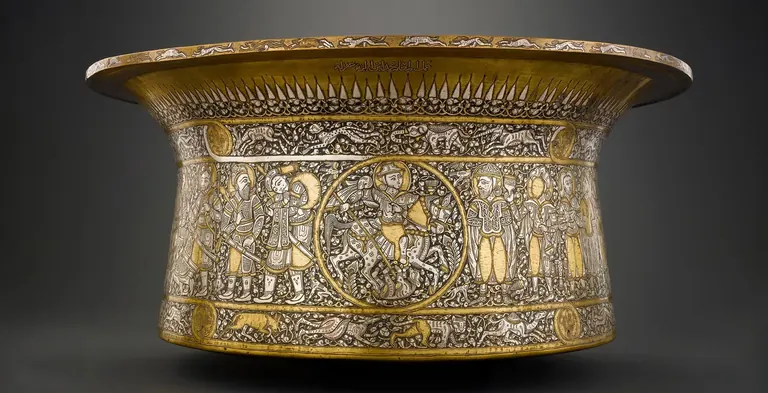
The Baptistery of Saint Louis basin leads 26 Louvre objects on their first trip to the US, with Washington the only stop. Alongside it: a Mughal dagger with a jade horse-head hilt, and the Córdoba peacock.
Look for
The Baptistery of Saint Louis
A Mamluk brass basin from around 1330, its surface inlaid with gold and silver and engraved with people and animals, winding plants filling the gaps between them.
The horse-head dagger
Look at the hilt of this Mughal dagger from around 1700: a finely detailed horse's head in black-veined white jade, set with rubies and emeralds.
Fath-Ali Shah on his throne
An oversized oil portrait of the black-bearded Persian ruler seated on a gold throne, covered in pearls, rubies and emeralds, sent to Napoleon as a diplomatic gift.
The Córdoba peacock
A heavy cast and engraved brass peacock from Umayyad Spain, made as part of an automaton, which the Louvre itself calls enigmatic.
The jade cup with a Persian poem
A nearly translucent Timurid cup of carved nephrite, Chinese in shape, with a Persian poem running around its edge and traces of gold.
Good for
- Cheap Culture
- Nerding Out
- Out-Of-Town Guests
- Rainy Days
Also at National Museum of Asian Art
On now nearby
Nearby
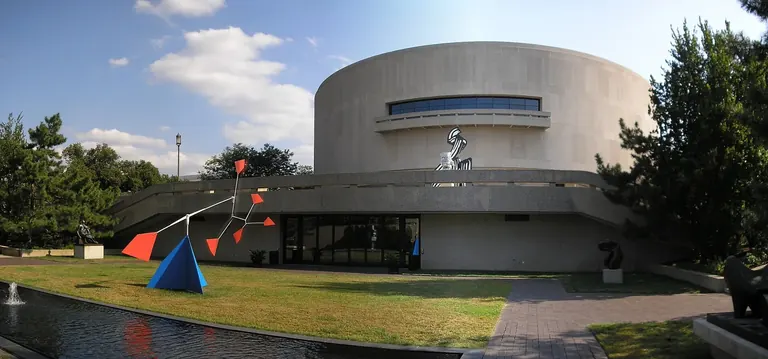
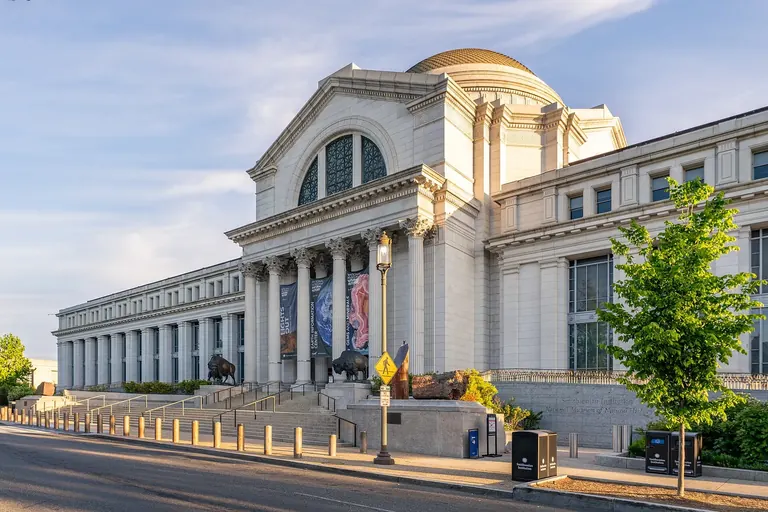
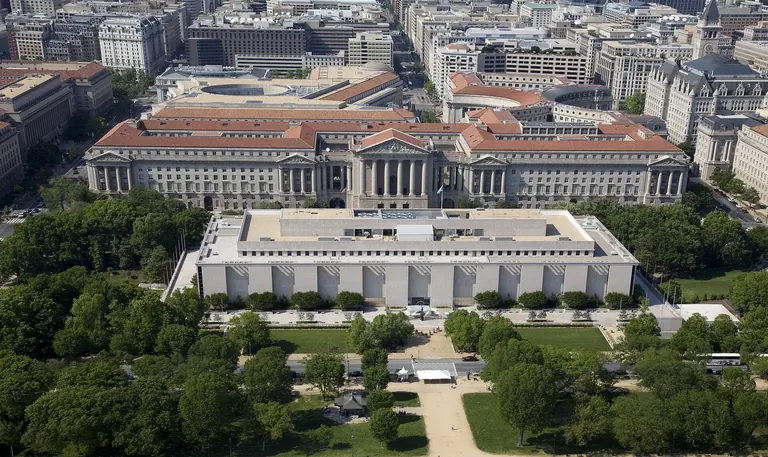
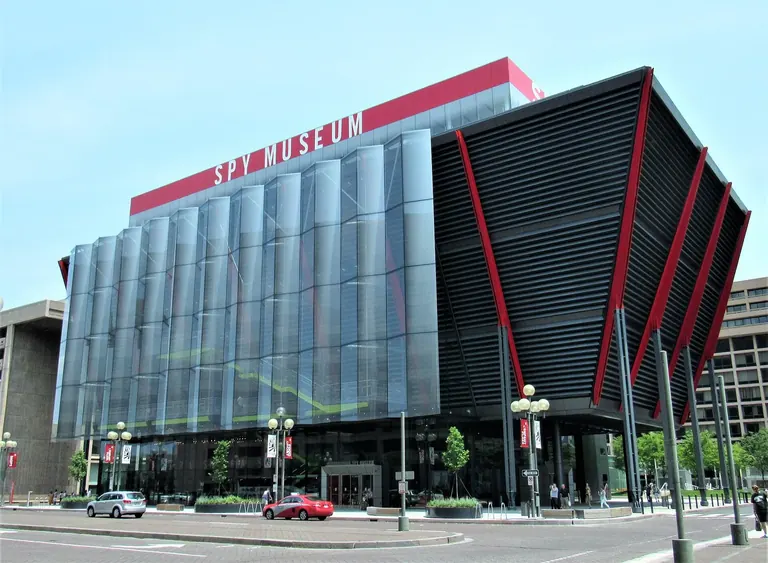
Image credits
9
- From the Louvre: Masterpieces of Islamic ArtCourtesy of National Museum of Asian Art
- Revolutions: Art from the Hirshhorn Collection, 1860–1960Hirshhorn Museum and Sculpture Garden, Smithsonian Institution
- Adam Pendleton: Love, QueenPeio Erroteta / Hirshhorn Museum and Sculpture Garden, Smithsonian Institution
- Light Is a Plastic Medium: The Photography of Carlotta CorpronCourtesy of Hirshhorn Museum and Sculpture Garden
- National Museum of Asian ArtDifference engine, via Wikimedia Commons, CC BY-SA 4.0
- Hirshhorn Museum and Sculpture GardenGryffindor, via Wikimedia Commons, Public domain
- National Museum of Natural Historyajay_suresh via Wikimedia Commons, CC BY 4.0
- National Museum of American HistoryCarol M. Highsmith / Wikimedia Commons, Public domain
- International Spy MuseumFarragutful, via Wikimedia Commons, CC BY-SA 4.0