 i
Jewish Museum MunichAltstadt-Lehel
Yalla. Arab-Jewish Encounters
Seven contemporary Jewish artists with roots in Arab-influenced regions explore identity, memory and belonging, tracing shared culture alongside histories of exclusion and violence.
More in Munich
A stone pine trunk hangs in mid-air, stripped of its roots, bark and branches. Hori Izhaki brought it from the Alps for To Plant a Memory, a reference to the European trees planted in early Israel that never suited the climate, and to the Arab identity that the "Europeanisation" left out.
The show comes from the Jewish Museum Hohenems, with a few works added for Munich, and fills Levels 1 and 2. Its eight artists have family roots across North Africa and West Asia, and sound plays a big part. You climb the stairwell inside Dor Zlekha Levy's sound piece Omek - Unk, made for this building.
Artline praised its finely balanced handling of complex material. Admission is €6 (€3.60 concessions), Tuesday to Sunday 10:00 to 18:00, with wall texts also in easy-read German and public tours in German. Until 31 October the foyer adds Eli Petel's free photo essay on Israeli memorial stickers for 7 October 2023.
Look for
The floating pine trunk
Look up at Hori Izhaki's To Plant a Memory: a whole Alpine stone pine, debarked and rootless, suspended in the room.
Delacroix's wedding, emptying out
Tamir Zadok animates Delacroix's 1839 Jewish Wedding in Morocco so the guests leave one by one, until only the oud player sits on the floor playing a sad tune.
The rolled prayer carpet
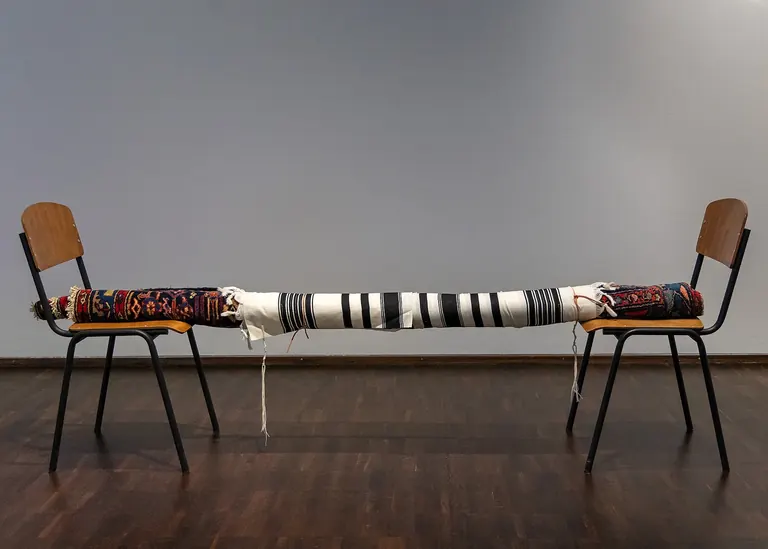
In Joseph Sassoon Semah's 1983 GiLGUL ShaTIaCh Carpet, a Jewish prayer shawl and an Islamic prayer rug are rolled up into each other.
Ezekiel's tomb on the floor
Semah's bronze floor piece Between Graveyard and Museum's Sphere joins a model of Ezekiel's tomb in Iraq with an oud and rams' horns.
Fatherland Archives
Dana Flora Levy's two-screen video lets her father speak, alongside glimpses into the Geniza archive that holds centuries of Egyptian Jewish history.
Good for
- Cheap Culture
- Nerding Out
- Rainy Days
With kids
Under-18s get in free, and the wall texts also come in easy-read German.
Also at Jewish Museum Munich
On now nearby
Nearby
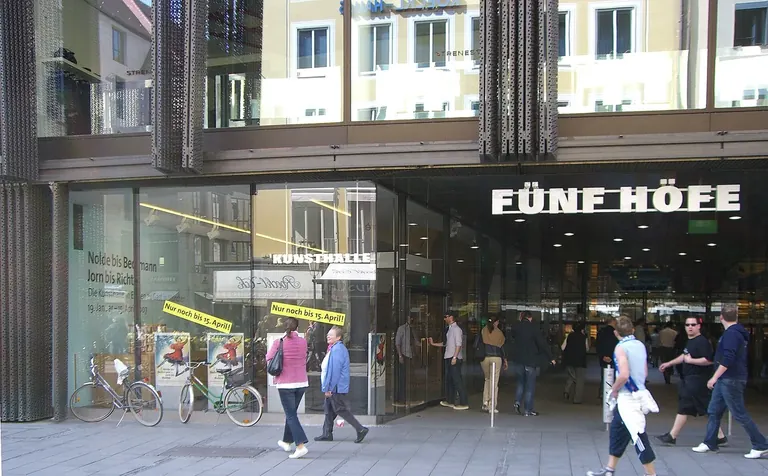
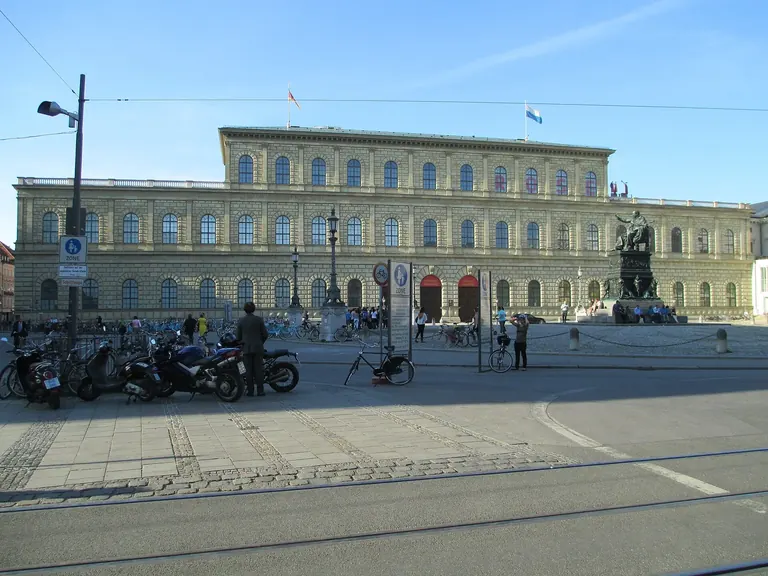
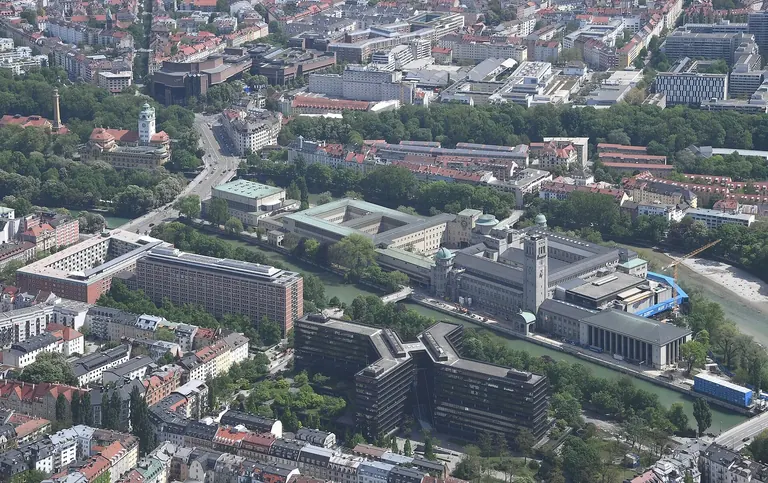
Image credits
8
- Yalla. Arab-Jewish EncountersPhoto: Eva Jünger / Jewish Museum Munich
- Barcelona Moderna: From Gaudí to PicassoCourtesy of Kunsthalle München
- Steina: PlaybackCourtesy of Haus der Kunst
- Jewish Museum MunichH-stt / Wikimedia Commons, CC BY-SA 4.0
- MUCA – Museum of Urban and Contemporary ArtMailtosap / Wikimedia Commons, CC BY-SA 4.0
- Kunsthalle MünchenMaximilian Dörrbecker (Chumwa), CC BY-SA 2.5
- Munich ResidenzAvi1111 dr. avishai teicher / Wikimedia Commons, CC BY-SA 4.0
- Deutsches MuseumCarsten Steger, CC BY-SA 4.0