 i
Petersen Automotive Museum · Miracle Mile
Legends of the Dirt
A case study in off-road motorsport: champion rally, desert, dirt-track and motocross machines, each once the pinnacle of engineering in its discipline.
The 1993 Suzuki Cultus in this room is the hatchback Americans bought as a Geo Metro, which normally had front-wheel drive and under 100 hp. This one has a turbocharged 1.6-litre engine at the front, a second one at the back, and about 800 hp in a car weighing less than 2,000 pounds. Nobuhiro "Monster" Tajima drove it up Pikes Peak.
The Nearburg Gallery on the 2nd floor lines up machines from desert racing, rallying, hill climbs, rock racing and motocross, with displays on how off-road technology works. You walk from Parnelli Jones's "Big Oly", a Bronco body over a tube chassis that won Baja in 1971 and 1972, to the 1983 Lancia 037 and a speedway bike with no brakes.
Car and Driver noted the change of mood from the museum's usual "gleaming sheetmetal on polished floors". Come for the engineering and the racing stories. It's included with admission: $52 for adults, $25 for ages 4 to 11, both with the Vault, until 18 January 2027.
Look for
The twin-engine Suzuki Cultus
A hugely winged subcompact with a turbocharged engine at each end, built for Tajima's 1993 Pikes Peak run.
Big Oly
Parnelli Jones's 1970 Bronco looks stock outside but hides a lightweight tube chassis, and its Baja wins helped set the Trophy Truck formula.
The 1983 Lancia Rally 037
The last rear-wheel-drive car to win the World Rally constructors' title; Walter Röhrl won the 1983 Monte-Carlo Rally in it.
Bruce Penhall's Weslake speedway bike
A brakeless 500cc machine he rode to the 1981 and 1982 World Championships before retiring straight after.
Ricky Carmichael's Honda CRF450R
The 2004 bike he rode to a perfect 24-moto sweep of the AMA Motocross season, his 12th title.
Good for
- Nerding Out
- Rainy Days
Skip if
You want polished show cars: these are race machines built for Baja, rally stages and rock courses.
With kids
Tickets for ages 4 to 11 are $25 and include the Vault.
Also at Petersen Automotive Museum
On now nearby

Nearby
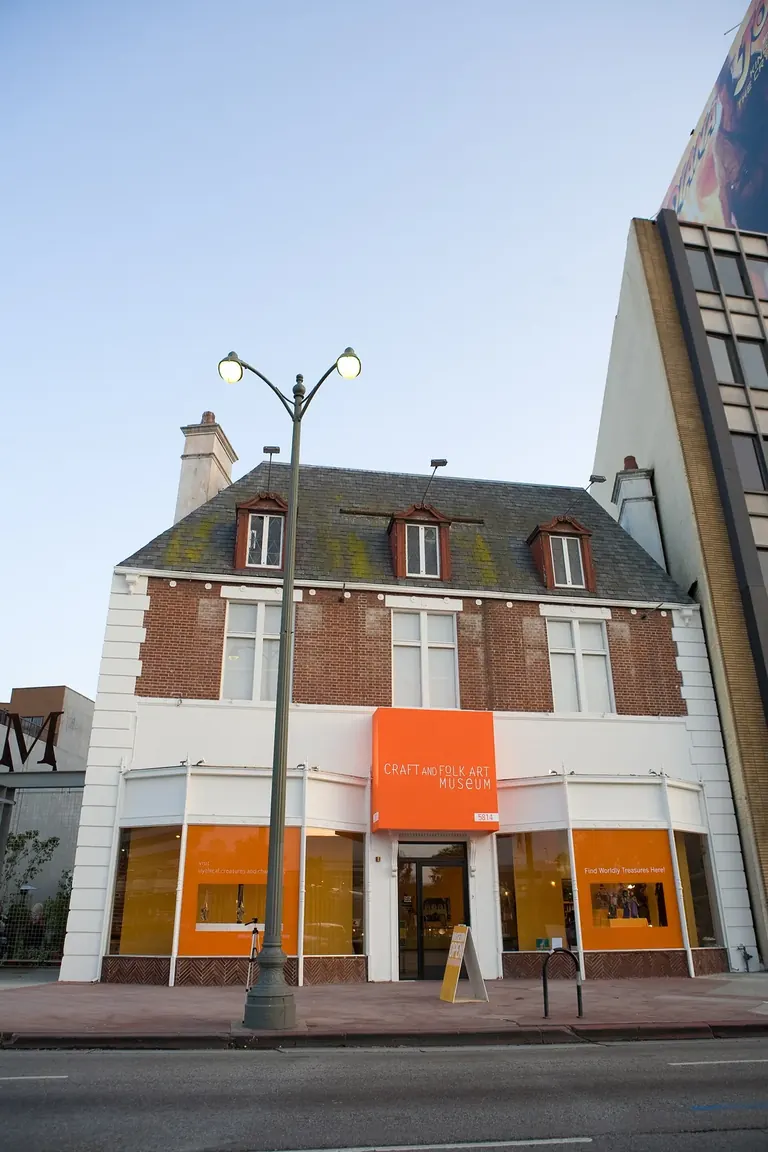
Image credits
8
- Legends of the DirtCourtesy of Petersen Automotive Museum
- Screenwriting: Takes on LA NoirCourtesy of Academy Museum of Motion Pictures
- Marilyn Monroe: Hollywood IconCourtesy of Academy Museum of Motion Pictures
- Studio Ghiblis PONYOCourtesy of Academy Museum of Motion Pictures
- Petersen Automotive MuseumDavid Zaitz / Wikimedia Commons, CC BY-SA 4.0
- Academy Museum of Motion PicturesDowntowngal / Wikimedia Commons, CC BY-SA 4.0
- Los Angeles County Museum of Art (LACMA)ArchEyes Magazine / Wikimedia Commons, CC BY 4.0
- Craft ContemporaryPaul Esposito / Wikimedia Commons, Public domain