 i
Victoria and Albert Museum · South Kensington
Constantinople to Istanbul: One City, Two Empires
A major UK-first exhibition exploring 1,600 years of art and design from one of the world's greatest cities, across the Byzantine and Ottoman empires.
More in London
Preview: written before the show opened
Seventeenth-century Ottoman artists drew the sultan's processions on long illustrated scrolls, made for foreign diplomats. A detail of one, lent by Manchester's John Rylands Library, is the show's header image. It is one of more than 200 objects covering 1,600 years, from Constantine refounding the city in AD 330 to the end of the Ottoman Empire in 1922.
The V&A tells Byzantine and Ottoman Istanbul as a single story, which it calls a first for a UK exhibition. You start at the Hippodrome, where chariot races doubled as imperial propaganda, move through Christian art made for Byzantine emperors and the silk and gold of Ottoman processions, and finish in the city's coffee houses, bathhouses and music gatherings. It ends on how both empires shaped 19th-century European design, William Morris included. His green dining room is the V&A café, so the epilogue has seating.
The show is in Galleries 38 and 39. Tickets are £25 on weekdays and £27 at weekends, with concessions, and the V&A recommends booking ahead.
Editor's pick
A UK first: 1,600 years of art and design from one city, across its Byzantine and Ottoman centuries, as Constantinople became Istanbul.
Look for
Bellini's Mehmed II
Gentile Bellini's 1479 portrait of the sultan who took Constantinople, a Venetian Renaissance painting lent by the National Gallery.
Selim II's jewelled belt
From the sultan's tomb: ivory inlaid with gold and a black substance, set with spinels or rubies and turquoises.
The Veroli Casket
A tenth-century Byzantine box of ivory and bone carved with mythological scenes, one of the oldest things in the show.
The tanbur
A long-necked wooden lute from about 1750, decorated with ivory, tortoiseshell and mother-of-pearl.
The Clephane Horn
An 11th-century Byzantine hunting horn carved from an elephant tusk, lent by the British Museum.
Good for
- First-Timers
- Nerding Out
- Out-Of-Town Guests
Free in the same building
- Ceramics GalleryNearly 30,000 pieces spanning Neolithic pots to Chinese porcelain, Italian maiolica, Delftware, and Sèvres — the world's largest ceramics collection.
- East Asia Collection (China, Japan & Korea)Chinese, Japanese, and Korean art and design from jade carvings and lacquerware to samurai armour and Buddhist sculpture.
- Fashion Collection3,000 years of dress from ancient Egypt to today — one of the world's most comprehensive fashion collections, free to explore.
- Furniture Gallery600 years of furniture-making, from Tudor masterpieces to 20th-century design icons, including the Great Bed of Ware (1590s).
- Jewellery Gallery3,500 pieces spanning 3,000 years — from ancient brooches to Art Deco tiaras — in the William and Judith Bollinger Gallery.
- Medieval and Renaissance GalleriesSculptures, stained glass, tapestries, and illuminated manuscripts from 300–1600 AD across 10 interconnecting galleries.
- Photography CentreThe UK's largest permanent photography galleries across seven rooms — 1840s daguerreotypes to contemporary digital practice.
- The Cast CourtsFloor-to-ceiling plaster casts of Renaissance masterpieces including Michelangelo's David and the full height of Trajan's Column.
Also at Victoria and Albert Museum
On now nearby

Nearby

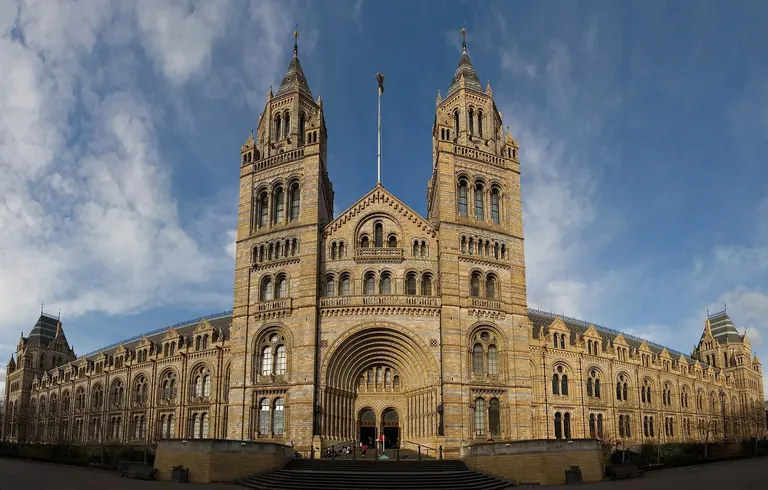
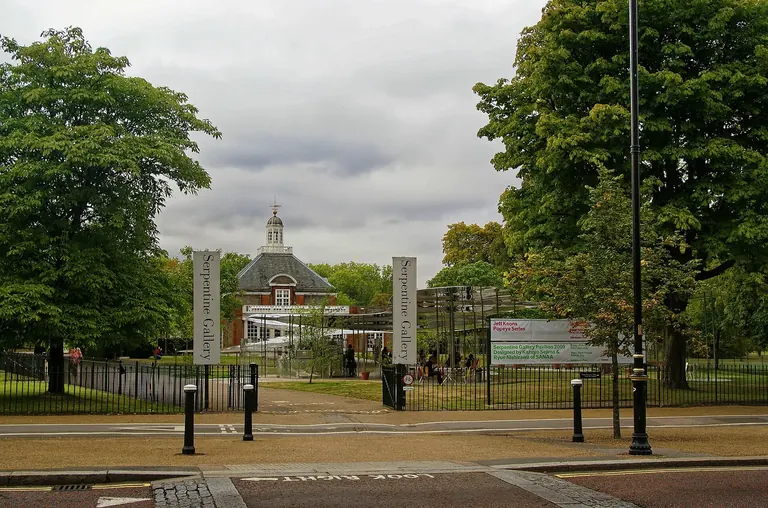
Image credits
9
- Constantinople to Istanbul: One City, Two EmpiresCourtesy of Victoria and Albert Museum
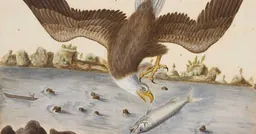
- Becoming America: How Science Shaped a NationCourtesy of Science Museum
- Jurassic Oceans: Monsters of the DeepCourtesy of Natural History Museum
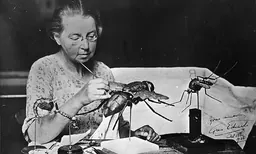
- Sir Richard Owen: A Natural LegacyCourtesy of Natural History Museum
- Victoria and Albert MuseumDiliff / Wikimedia Commons, CC BY-SA 3.0
- Science MuseumChristine Matthews / Wikimedia Commons, CC BY-SA 2.0
- Natural History MuseumDiliff / Wikimedia Commons, CC BY-SA 3.0
- Serpentine GalleryTxllxt TxllxT / Wikimedia Commons, CC BY-SA 3.0
- Saatchi GalleryAnthony O'Neil / Wikimedia Commons, CC BY-SA 2.0