 i
MassArt Art MuseumMission Hill / Longwood
Robert Lazzarini: metes and bounds
Mathematically distorted sculptures that warp familiar symbols of American identity, including new works originally conceived for the US Pavilion at the 2026 Venice Biennale.
More in Boston
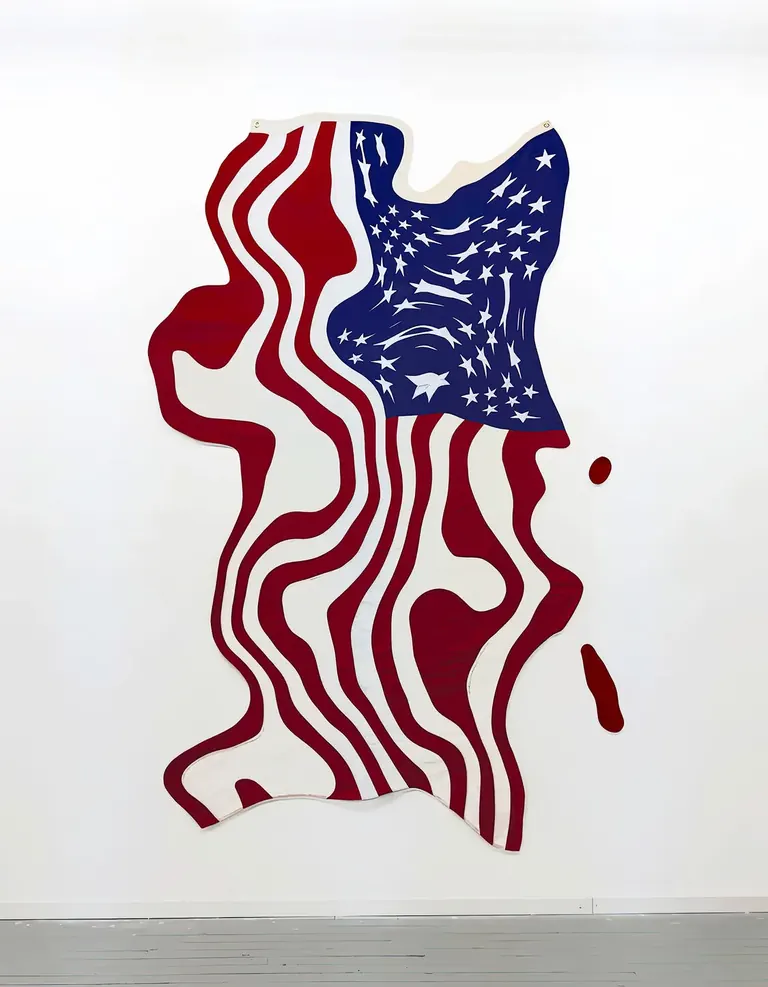
The first thing you meet is an American flag, the kind draped over service members' coffins, hanging from the wall as if it had liquefied. It is one of four flags Robert Lazzarini planned for the US Pavilion at this year's Venice Biennale, a proposal that collapsed when its sponsor, the University of South Florida, pulled out.
Nine works fill the Bakalar Gallery, each made of the same material as the thing it copies, then melted or skewed until it can't work. MAAM commissioned two more pieces from the Venice plan: a wooden 17th-century meeting-house lectern and 12 swirling woodcuts after the 1507 Waldseemüller map, the first to name America. Further back, a rotary phone, a safe and an institutional chair are pulled into forced perspective under hard fluorescent light.
The New York Times' Kim Córdova called the Venice pieces the real draw, but found the show stuck on colonial and midcentury objects. It's free with no ticket, and open Thursdays until 8pm.
Editor's pick
Familiar symbols of American identity, mathematically distorted until they warp out of shape, including new works first conceived for the US Pavilion at the 2026 Venice Biennale.
Look for
The liquefied flag
Look for a fabric American flag, the coffin-drape kind, sagging down the wall as if it had melted: one of four planned for Venice.
The Waldseemüller woodcuts
Twelve swirling woodcuts, one for each sheet of the 1507 map that first labelled America as a separate landmass.
The noodle barricade
A New York City police barricade stretched and twisted into cartoonish noodles, in conversation with the warped colonial lectern.
The shot-up street signs
Two melting signs on a nearby wall, "Dead End" and "Private Property. No Trespassing", both riddled with bullet holes.
The back wall objects
A Western Electric 500-series rotary phone and a grey metal safe with its door blown off, both pulled into forced perspective.
Good for
- An Hour Or Less
- Cheap Culture
- Evening Visits
- Nerding Out
Skip if
You want art about how power works now: the Times critic found it stuck on colonial and midcentury objects.
Also at MassArt Art Museum
On now nearby

Nearby
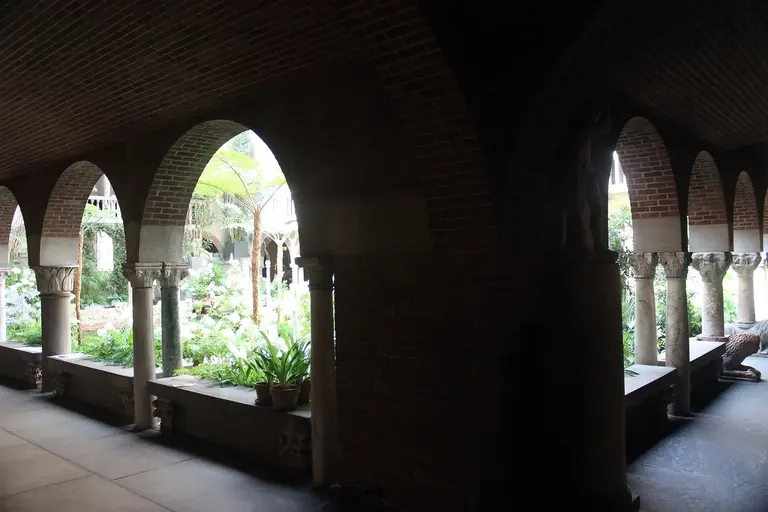
Image credits
8
- Robert Lazzarini: metes and boundsCollection Meredith and Brad Stadler. Photo: R. Lazzarini
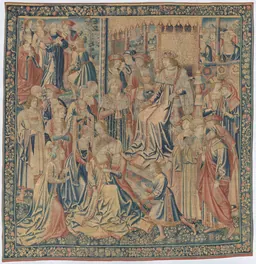
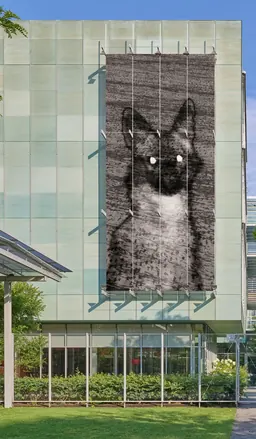
- Michal Rovner: Esther ScrollsCourtesy of Isabella Stewart Gardner Museum
- The Book of Esther in the Age of RembrandtIsabella Stewart Gardner Museum
- Michal Rovner: Untitled/Night, 2016Isabella Stewart Gardner Museum
- MassArt Art Museumajay_suresh, via Wikimedia Commons, CC BY 4.0
- Isabella Stewart Gardner MuseumMiguel Hermoso Cuesta / Wikimedia Commons, CC BY-SA 4.0
- Museum of Fine Arts, BostonBeyond My Ken / Wikimedia Commons, CC BY-SA 4.0
- Massachusetts Historical Societyajay_suresh, via Wikimedia Commons, CC BY 4.0