Trusted by cultural institutions worldwide
Musa powers guided experiences in 40+ languages across three continents, from art museums to archaeological sites.








What is a digital audio guide?
A digital audio guide is a museum tour on the visitor's own phone instead of a rented handset. The visitor scans a QR code at the entrance, the guide opens in the browser — no app, no account — they pick one of 40+ languages, and the tour starts where they stand. When something makes them curious, they simply ask: the guide answers from the knowledge base your team maintains.
Every part of that has its own deep dive: the browser-based audio guide app visitors use, the audio guide software your team works in, how an audio guide is created, multilingual delivery, and the AI audio guide capability behind visitor questions.
Audio guides, how they should have been
There is a big difference between a guide and a recording. Your visitors will notice. See all features.
Ask anything, get answers you can trust
Never wonder where to go next
Thousands of conversations. Visitor insights you can act on.


The evolution of audio guides
From hardware to AI-native: each generation solved one problem but left others unsolved.
Traditional Hardware
Rented devices with pre-recorded tracks
BYOD Apps
Visitor phones with static audio
AI-Arranged
AI suggests routes through static content
AI Native
Guided tours + live conversation
Curation without the hassle
1. Upload
Share your existing material, from catalogues to floorplans. Automatically turned into a knowledge graph.

2. Design
Focus on the story instead of the script. Choose stops, tone, languages and guardrails.

3. Feedback
See what resonates and what's missing. Update in minutes, not months.

1. Upload
Share your existing material, from catalogues to floorplans. Automatically turned into a knowledge graph.
2. Design
Focus on the story instead of the script. Choose stops, tone, languages and guardrails.
3. Feedback
See what resonates and what's missing. Update in minutes, not months.
What museums check before choosing an audio guide
The procurement questions that decide whether a guide still fits in five years — and where Musa stands on each.
For the full capability list, see the audio guide software evaluation table; for costs, the pricing models.
Not all AI audio guides are the same
Most approaches automate the old format. We built it from scratch.
Faster scripts, less authentic
AI writes and voices a traditional script. Production gets cheaper, but every visitor hears the same fixed recording. No conversation, no personalisation.
A guide that shows you around
A curated journey visitors can question and explore freely. Personalised, continuous, authentic, and fast to produce.
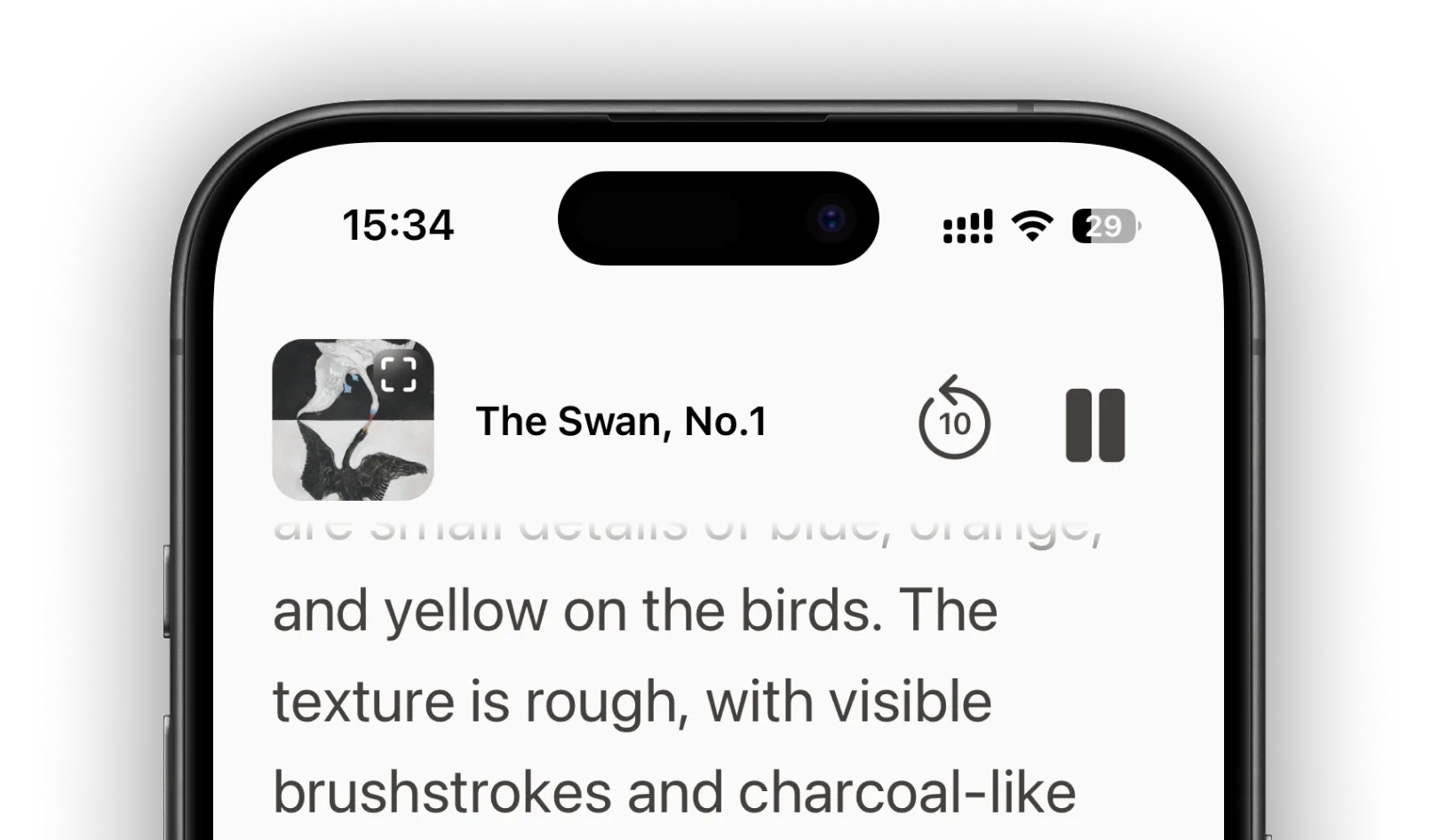
One painting at a time
Visitors can ask about a single artwork in front of them. No route between rooms, no curation, no sense of the collection as a whole.
Pricing that starts at zero
No setup fees, onboarding included. Choose revenue share with no upfront costs, a subscription from £500 a month, or prepaid credits from £1,000.

Questions museums ask about digital audio guides
Musa has three models: revenue share with no upfront costs, a subscription from £500 per month, or prepaid session credits from £1,000. Onboarding and content ingestion are included; there is no setup fee.
The guide runs in the web browser of the visitor's own phone — iPhone or Android, with nothing to install. Your team only needs a browser as well.
Phones connect over your Wi-Fi or their own mobile data. Tour audio has offline support, so narration keeps playing in dead zones; live AI answers pause while a phone is offline and resume when the connection returns.
Visitors can speak or type, listen or read. Automatic visual descriptions and audio transcriptions support visually impaired and deaf visitors on the same tour as everyone else.
You can export your full knowledge graph, transcripts and analytics at any time, and everything stays ready in your account even if you pause billing.
Yes. Visitors can scan QR codes or reuse the audio-guide numbers you already have on your labels, so the switch does not require re-signing the galleries on day one.