 i
National Museum of African American History and Culture
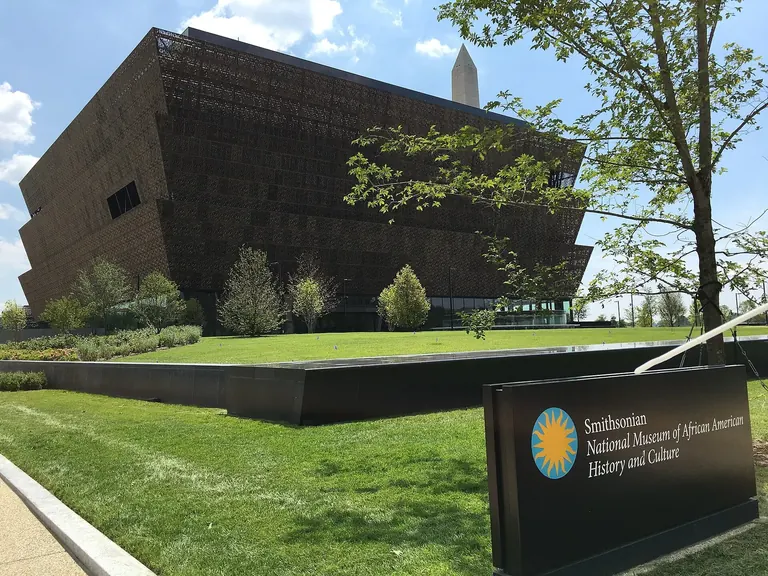
Opened in September 2016, the Smithsonian's National Museum of African American History and Culture is the only national museum devoted entirely to documenting African American life, history and culture. The 350,000-square-foot building, designed by a team led by David Adjaye with Philip Freelon and Davis Brody Bond, is wrapped in a three-tiered bronze-coloured scrim whose perforated pattern recalls the ornamental ironwork made by enslaved craftsmen in the American South. Ten storeys — five of them below ground — send visitors to the bottom first, where the History Galleries begin with the transatlantic slave trade and ramp upward through segregation to the present, before the Community and Culture galleries above. Roughly 3,500 of the museum's 40,000-plus objects are on view, from a walk-through Jim Crow railway coach to Parliament-Funkadelic's Mothership.
More in Washington, DC
What's On
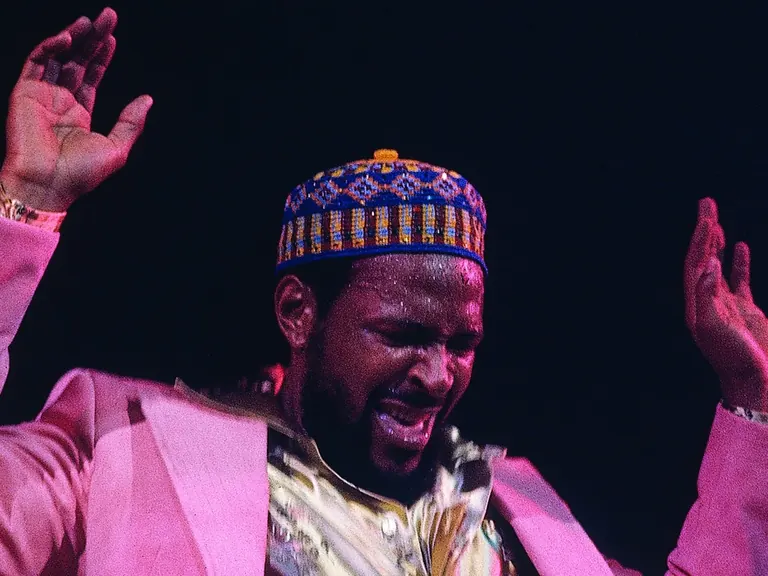
Spirit in the Dark: Religion in Black Music, Activism and Popular Culture
Black religious life seen through Johnson Publishing Company photographs from Ebony and Jet, where the holy and the profane meet in music, protest and pop culture.
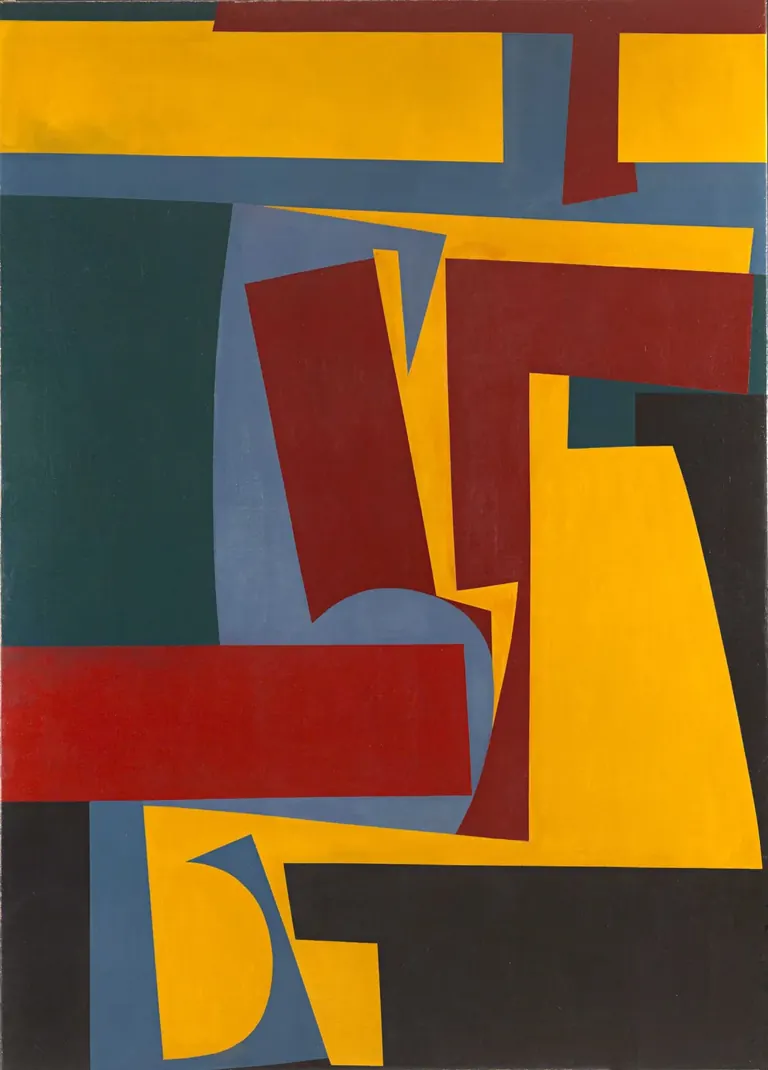
Revelation: A Journey into Abstraction
41 abstract works by 38 African American artists from the mid-20th century to today, in five themes from The Shape of Sound to Transcendent Visions.
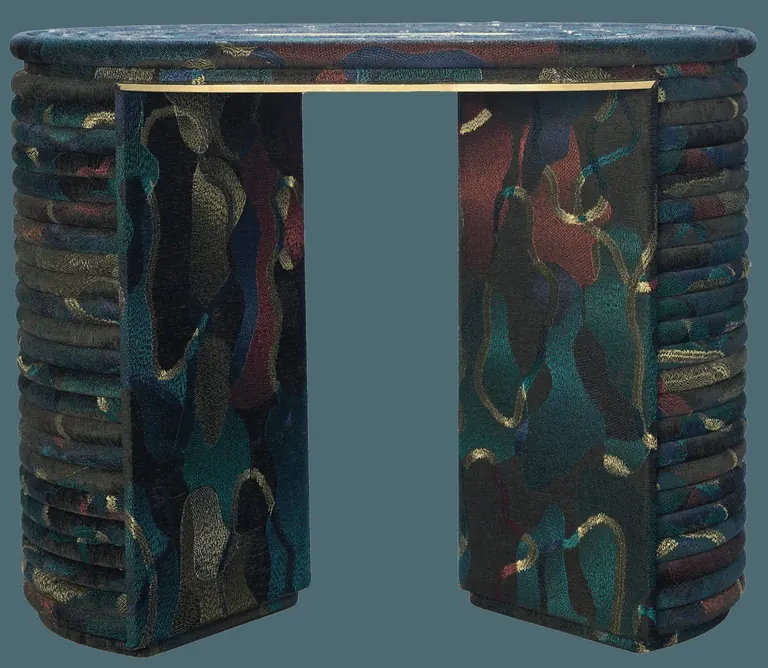
Reset: Abstraction Embodied in Design
Chairs, rugs and lighting by Black designers: abstraction taken off the wall and into functional objects that make everyday rooms sites of rest and renewal.
Permanent Collections
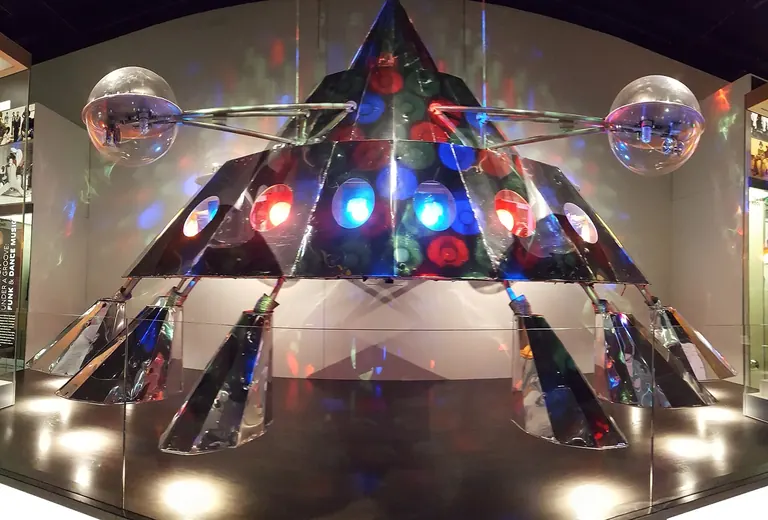
Musical Crossroads
African American music from the arrival of the first Africans to the present, anchored by Parliament-Funkadelic's Mothership landed inside the gallery.
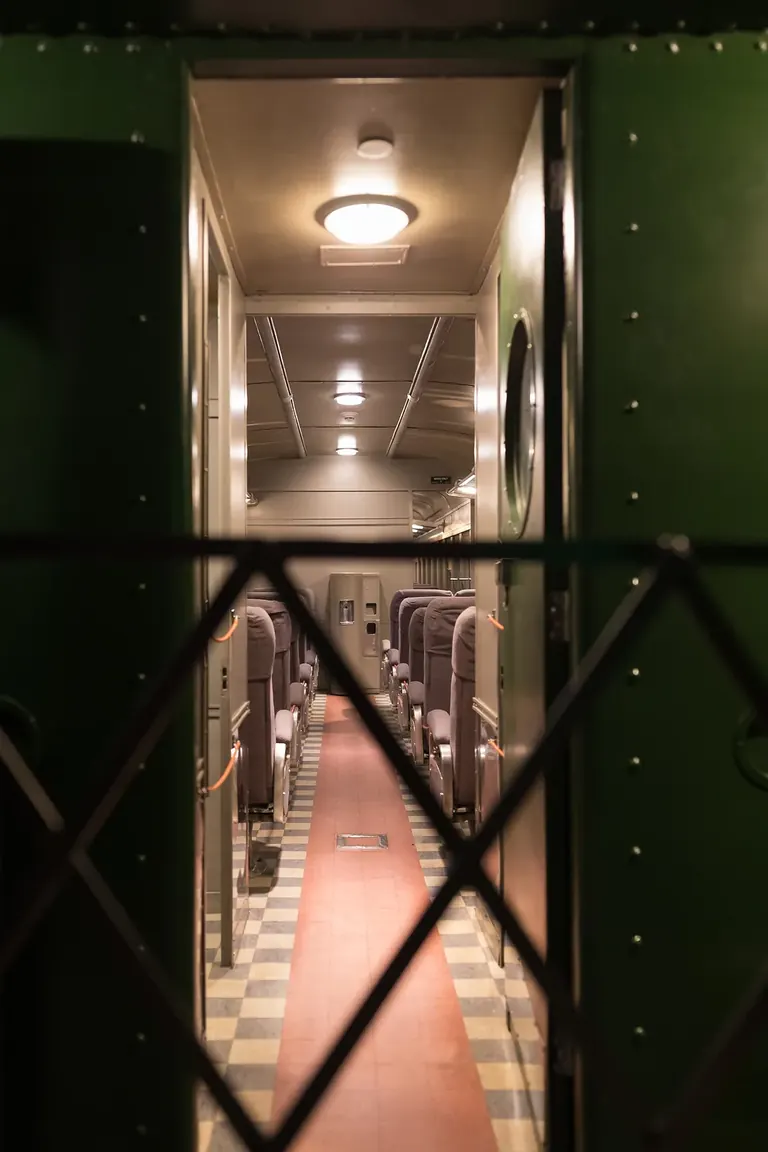
Defending Freedom, Defining Freedom: Era of Segregation 1876–1968
The era of segregation told from the inside, including a walk-through Southern Railway coach No. 1200 rebuilt in 1940 to seat white and "colored" passengers apart.
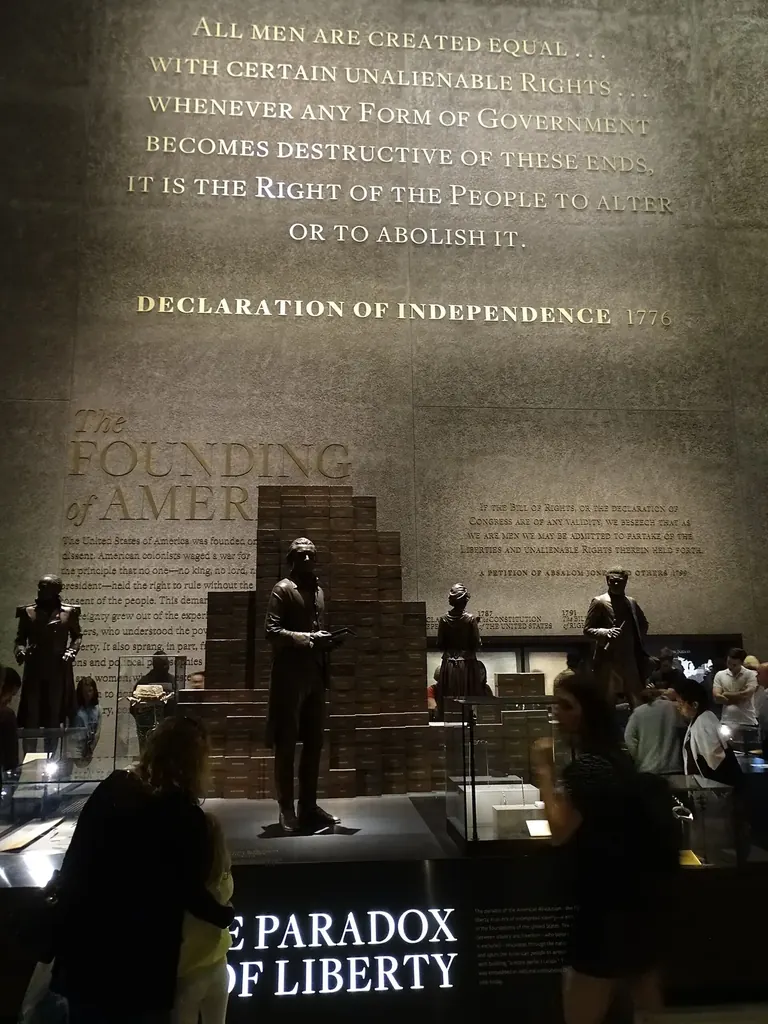
Slavery and Freedom
The museum's foundational gallery, tracing 500 years from the transatlantic slave trade and the paradox of liberty through emancipation and Reconstruction.
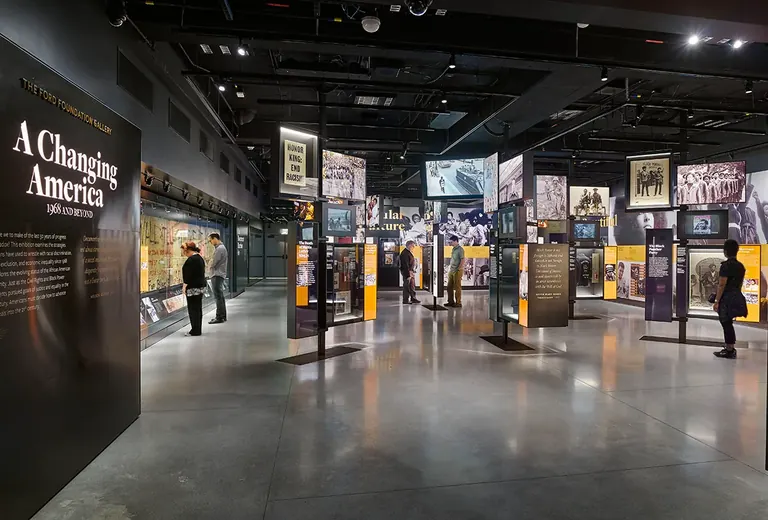
A Changing America: 1968 and Beyond
The final History Gallery: Black life since 1968, from the Black Power era through the struggles for equity and the evolving meaning of African American identity.
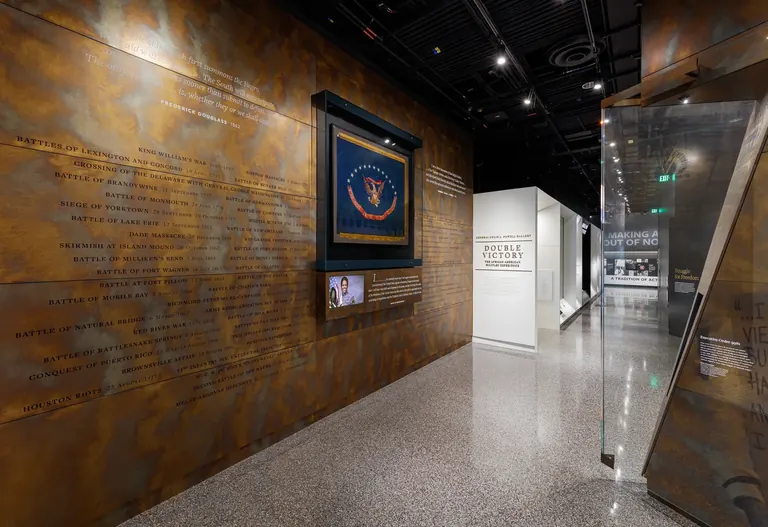
Double Victory: The African American Military Experience
African American military service from the American Revolution to the War on Terror, and the fight for liberty and citizenship that came with it.
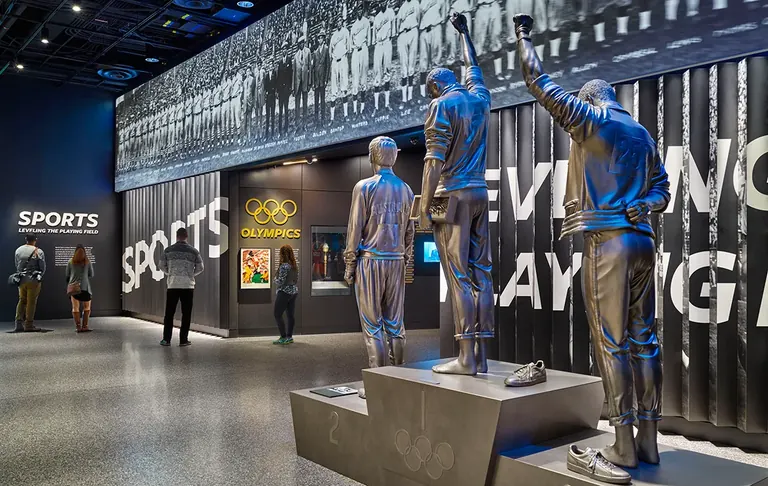
Sports: Leveling the Playing Field
Black athletes on and off the field, from segregated leagues to activists who carried the fight to the courtroom, boardroom and newsroom.
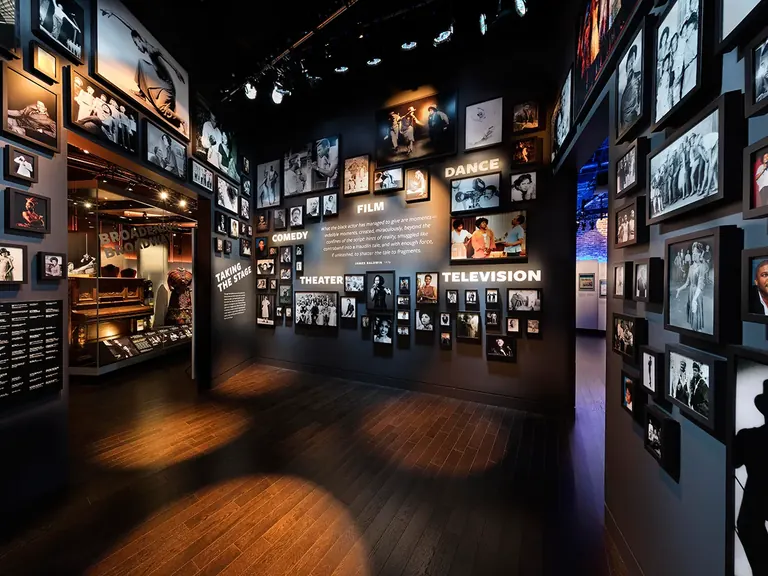
Taking the Stage
African Americans in theater, film and television: creative achievements, cultural impact and the fight against stereotypes for artistic freedom and fair representation.
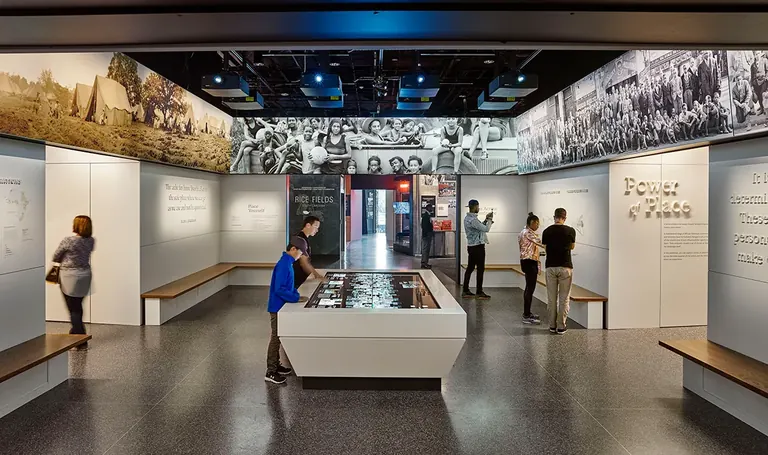
Power of Place
Ten "place studies" from across the country showing how African Americans made places for themselves through migration, struggle and community.
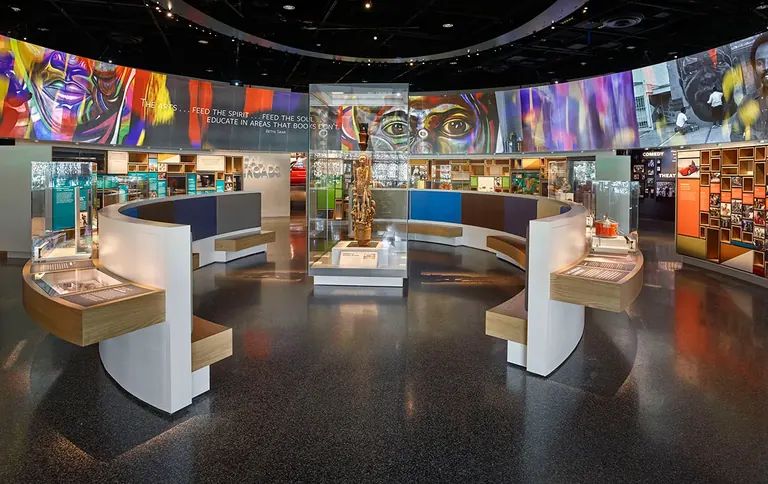
Cultural Expressions
A circular introduction to African American and African diaspora culture on the Culture Galleries floor: food, language, style, gesture and art in everyday life.
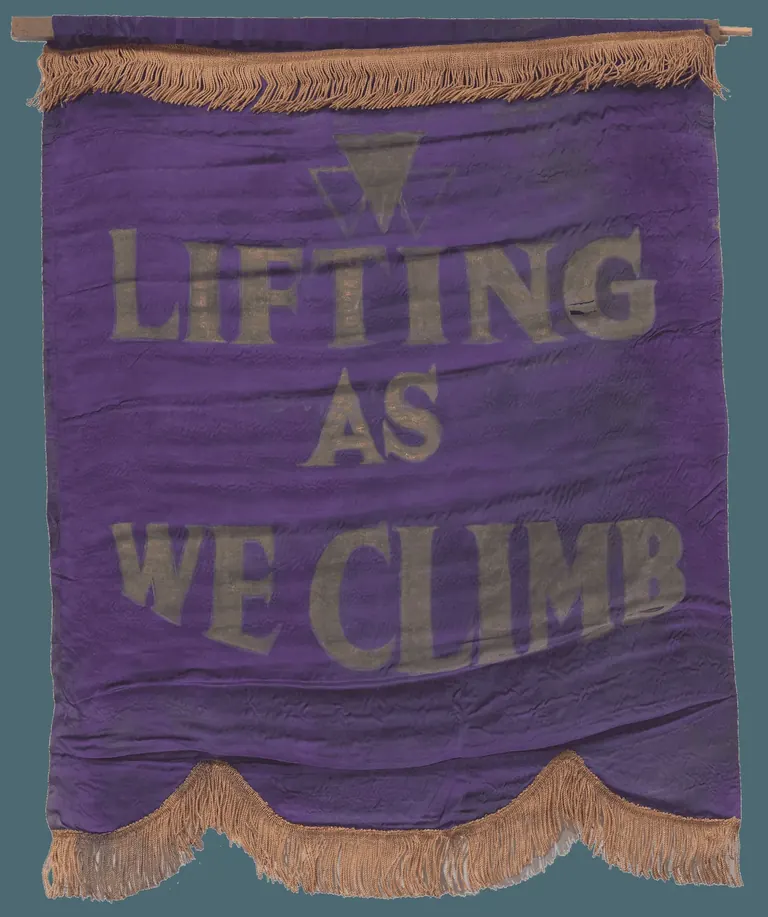
Making a Way Out of No Way
How African Americans built businesses, churches, schools and a press of their own under segregation, across six themes from An Enterprising Spirit to The Value of Education.
Plan Your Visit
Getting there
1400 Constitution Ave NW, Washington, DC 20560, United States
Nearest station: Federal Triangle (Metro Blue/Orange/Silver), Smithsonian (Metro Blue/Orange/Silver, Mall exit) and L'Enfant Plaza (Metro Green/Yellow/Blue/Orange/Silver)
Show on mapHours
| Mon | 12:00–17:30 |
| Tue | 10:00–17:30 |
| Wed | 10:00–17:30 |
| Thu | 10:00–17:30 |
| Fri | 10:00–17:30 |
| SatToday | 10:00–17:30 |
| Sun | 10:00–17:30 |
Admission
Free
Admission is free, but a free timed-entry pass is required for every visitor regardless of age. Advance passes are released 30 days ahead on a rolling basis; same-day passes go online at 8:15 a.m. ET. Up to nine passes per reservation. Last entry 4:00 p.m.
Last verified
Nearby
Visitor Information
- Is National Museum of African American History and Culture free to visit?
- Yes, general admission to National Museum of African American History and Culture is free. Admission is free, but a free timed-entry pass is required for every visitor regardless of age. Advance passes are released 30 days ahead on a rolling basis; same-day passes go online at 8:15 a.m. ET. Up to nine passes per reservation. Last entry 4:00 p.m.. Some special exhibitions may charge a separate ticket, so check the museum's website before visiting.
- What are the opening hours of National Museum of African American History and Culture?
- National Museum of African American History and Culture is open Monday 12:00–17:30; Tuesday–Sunday 10:00–17:30. Last entry 16:00. Closed 25 December. Free timed-entry passes required for all visitors.. Holiday hours can vary, so check the museum's website before you go.
- Where is National Museum of African American History and Culture?
- National Museum of African American History and Culture is located at 1400 Constitution Ave NW, Washington, DC 20560, United States, in the National Mall area of Washington, DC. The nearest stations are Federal Triangle (Metro Blue/Orange/Silver), Smithsonian (Metro Blue/Orange/Silver, Mall exit) and L'Enfant Plaza (Metro Green/Yellow/Blue/Orange/Silver).
- What can I see at National Museum of African American History and Culture?
- A bronze corona on the National Mall: five underground floors climb from slavery to freedom, then rise into music, sport and the Mothership. Current highlights include Musical Crossroads, Defending Freedom, Defining Freedom: Era of Segregation 1876–1968 and Slavery and Freedom.
- Do I need to book National Museum of African American History and Culture in advance?
- National Museum of African American History and Culture is free to enter and most days you can walk in. Admission is free, but a free timed-entry pass is required for every visitor regardless of age. Advance passes are released 30 days ahead on a rolling basis; same-day passes go online at 8:15 a.m. ET. Up to nine passes per reservation. Last entry 4:00 p.m.. For special exhibitions, weekends, and school holidays, booking a timed slot can help you skip queues. Check the museum's website for current requirements.
- When is the best time to visit National Museum of African American History and Culture?
- Weekday mornings shortly after opening are typically the quietest, especially mid-week. Late afternoons can also be calmer. Weekends, school holidays, and the lunch rush are the busiest periods.
Image credits
18
- National Museum of African American History and CultureFuzheado, via Wikimedia Commons, CC BY-SA 4.0
- Musical CrossroadsFuzheado, via Wikimedia Commons, CC BY-SA 4.0
- Defending Freedom, Defining Freedom: Era of Segregation 1876–1968Frank Schulenburg, via Wikimedia Commons, CC BY-SA 4.0
- Slavery and FreedomAdam Jones, via Wikimedia Commons, CC BY-SA 2.0
- Revelation: A Journey into AbstractionCollection of the Smithsonian National Museum of African American History and Culture
- Spirit in the Dark: Religion in Black Music, Activism and Popular CultureCourtesy of National Museum of African American History and Culture
- A Changing America: 1968 and BeyondCourtesy of National Museum of African American History and Culture
- Double Victory: The African American Military ExperienceCourtesy of National Museum of African American History and Culture
- Sports: Leveling the Playing FieldCourtesy of National Museum of African American History and Culture
- Taking the StageCourtesy of National Museum of African American History and Culture
- Power of PlaceCourtesy of National Museum of African American History and Culture
- Cultural ExpressionsCourtesy of National Museum of African American History and Culture
- Making a Way Out of No WayCollection of the Smithsonian National Museum of African American History and Culture
- Reset: Abstraction Embodied in DesignCollection of the Smithsonian National Museum of African American History and Culture
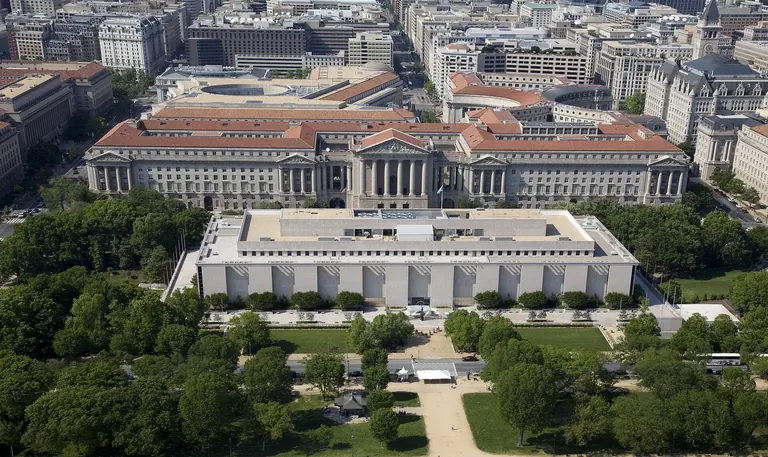
- National Museum of American HistoryCarol M. Highsmith / Wikimedia Commons, Public domain
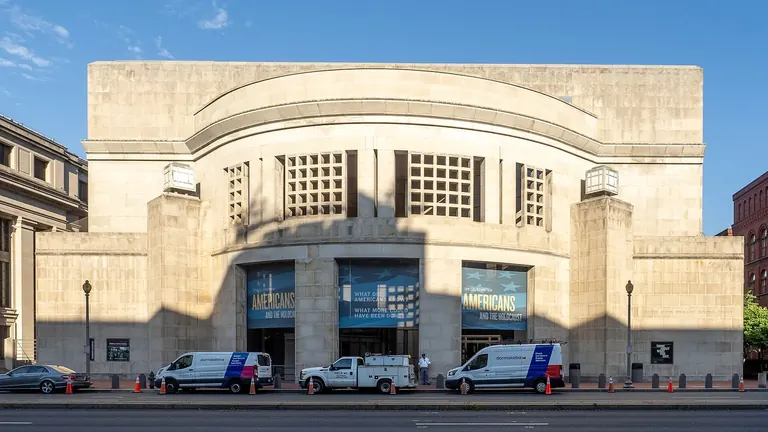
- United States Holocaust Memorial Museumajay_suresh via Wikimedia Commons, CC BY 2.0
- National Museum of Natural Historyajay_suresh via Wikimedia Commons, CC BY 4.0
- National Museum of Asian ArtDifference engine, via Wikimedia Commons, CC BY-SA 4.0