 i
American University Museum at the Katzen Arts CenterWard Circle, Northwest DC
Ahn Chang-Hong: noon-mool
A major solo show filling the museum's second and third floors with the Korean artist's paintings, sculpture and multimedia, centred on his Taxidermy series on mortality.
More in Washington, DC
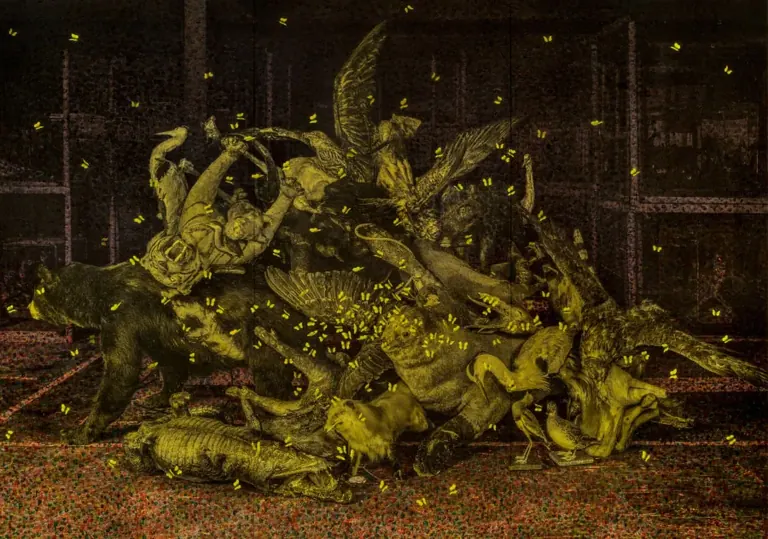
A fawn, a badger and a langur, all stuffed and then thrown away, each with a tear painted down its face. These come from Ahn Chang-Hong's Taxidermy series, where he layers paint over photographs of taxidermied animals and sets them against flat, vivid single-colour backgrounds. The show's title, noon-mool, is Korean for tears.
This is Ahn's first solo show in the US, and it fills the museum's second and third floors. The Taxidermy works are larger than life, and some put the animals beside human mannequins and anatomical figures. The tagline is "When the Forgotten Return Our Gaze", and you walk past animals that look straight back at you. Sculptures and earlier paintings, back to Love in 1994, trace a career that began in Korea's Minjung art movement of the 1980s, when artists took on political repression and inequality.
The museum's director, Jack Rasmussen, warns that the work "can be unsettling". Entry is free, Wednesday to Sunday, 11am to 4pm.
Editor's pick
Ahn Chang-Hong paints tears onto photographs of discarded taxidermy: a fawn, a badger, a langur. His first US solo show fills two floors of the Katzen, with work back to 1994; the museum's director calls it "unsettling".
Look for
The weeping animals
Look for the fawn, the badger and the langur from the Taxidermy series, each with painted tears, set against a flat, bright single-colour background.
Animals beside mannequins
Other Taxidermy works put discarded stuffed animals next to human mannequins and anatomical figures, so the specimens and the models share one picture.
Good for
- Cheap Culture
- Locals Who've Seen It All
- Rainy Days
Skip if
You want a light afternoon: it's about grief, violence and mortality, and the museum director calls it unsettling.
Also at American University Museum at the Katzen Arts Center
On now nearby
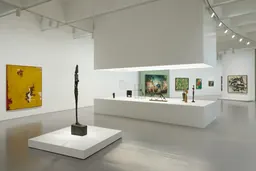
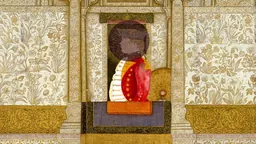
Image credits
5
- Ahn Chang-Hong: noon-moolCourtesy of American University Museum at the Katzen Arts Center
- Revolutions: Art from the Hirshhorn Collection, 1860–1960Hirshhorn Museum and Sculpture Garden, Smithsonian Institution
- Shahzia Sikander: The Last Post© 2025 Shahzia Sikander, courtesy the artist and Sean Kelly; Smithsonian American Art Museum
- Creative Aging 2026: Art Is EssentialPhoto Blythe / The Phillips Collection
- American University Museum at the Katzen Arts CenterHerrperry123 / Wikimedia Commons, CC BY-SA 4.0