 i
Academy of Natural Sciences of Drexel UniversityLogan Square
Native Plants on the Parkway: A Botany of Nations Garden
An outdoor living demonstration garden on the Benjamin Franklin Parkway planted with species native to Northeastern North America, extending the Botany of Nations story outside.
More in Philadelphia
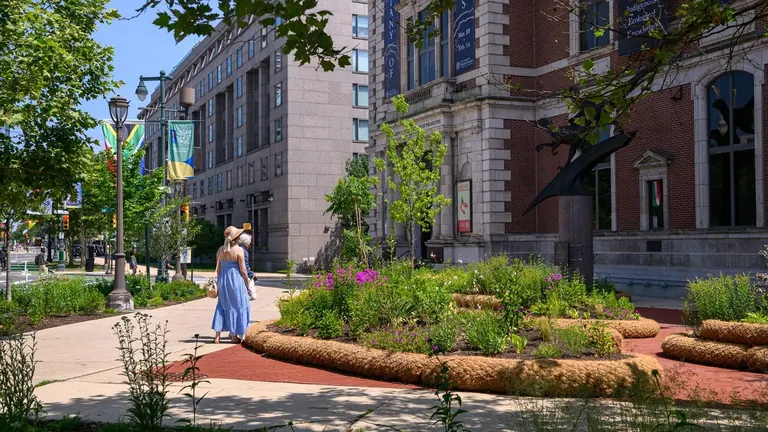
Staghorn sumac grows in a curb strip on the Benjamin Franklin Parkway, and the Academy's plant guide says its red fruit is soaked in cold water for "sumac lemonade". Beds edged with curving coir logs, coconut-fibre rolls normally used for erosion control, have replaced brick and concrete outside the museum.
This is the outdoor half of Botany of Nations, the Lewis and Clark show inside. The expedition's plants came from the Plains and the Pacific Coast; these are Northeastern natives, from hackberry to cardinal flower. Rough goldenrod is here too, and the guide clears it of hay fever: insects carry its pollen, so your autumn sneezing needs another culprit.
You stand on the sidewalk with two PDFs from the Academy's site on your phone: a map tagging every plant, and ethnobotanist Linda Black Elk's guide to 25 of them, with their Lakota, Ojibwe or Lenape names and uses. No critic has reviewed it, and the season decides what you see.
Look for
Staghorn sumac
Look for velvety branches and upright clusters of bright red fruit, which the plant guide says are soaked in cold water to make a tart drink.
The coir-log beds
The raised beds curve in rolls of coconut-husk fibre netting, an erosion-control material that is fully compostable.
Cardinal flower
Bright red flowers on a plant too toxic to eat, used instead in offering and tobacco mixtures, according to the guide.
Flowering tobacco
Long tubular flowers that open in the evening for moths; a South American species, kin to the tobaccos used in prayer and ceremony.
Purple coneflower
Drooping purplish-pink petals around an orange-brown seed cone; the guide notes it is protected on many reservations, where harvesting needs a permit.
Good for
- Locals Who've Seen It All
- Nerding Out
Skip if
You want indoor exhibits: this is planting beds along the sidewalk outside the museum.
Also at Academy of Natural Sciences of Drexel University
On now nearby


Nearby
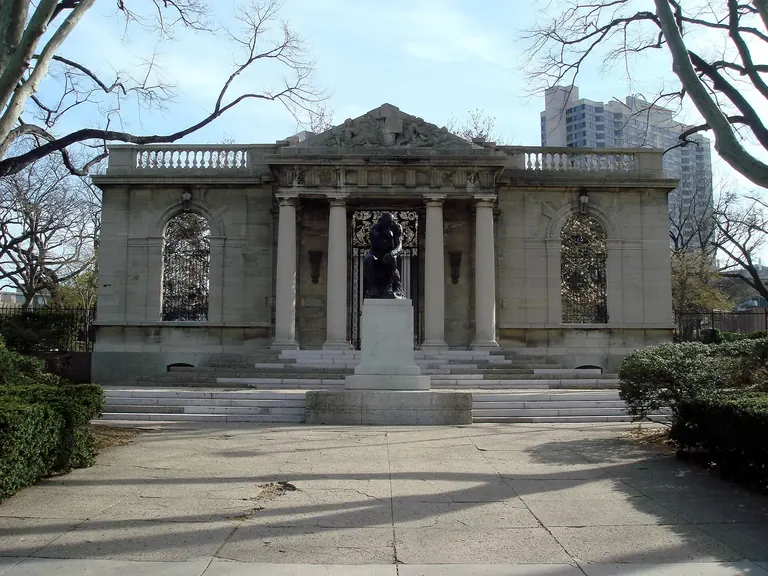
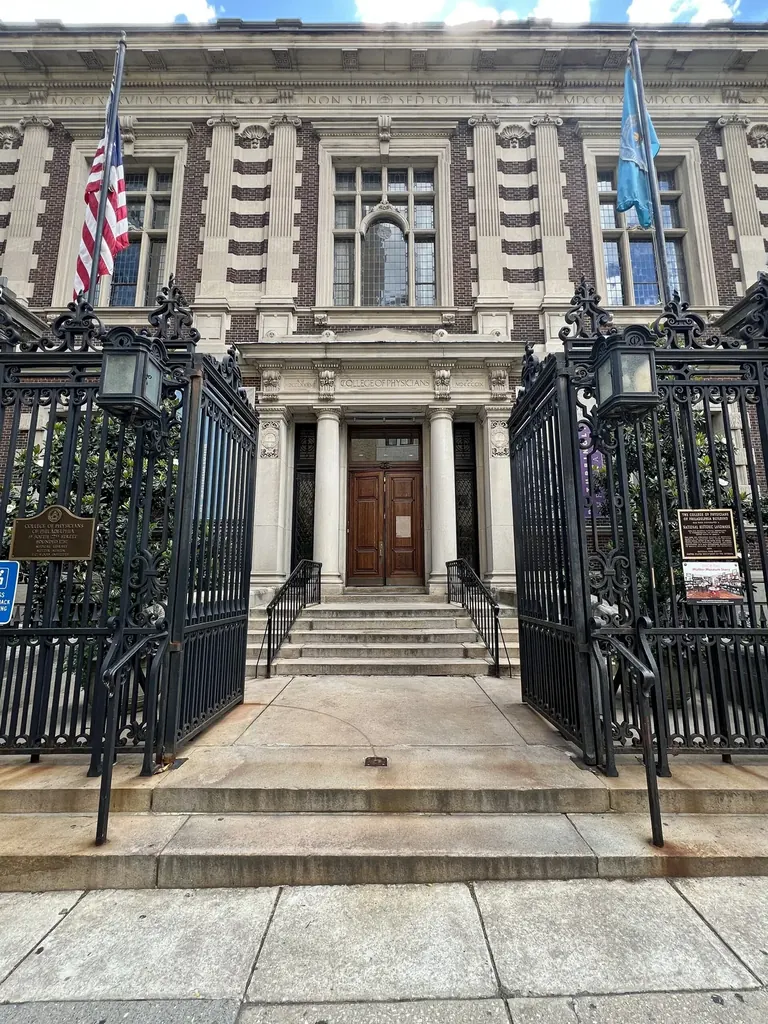
Image credits
9
- Native Plants on the Parkway: A Botany of Nations GardenCourtesy of Academy of Natural Sciences of Drexel University
- Noguchi to Asawa: Designing Postwar America© Leo Amino Estate. Courtesy of the estate and David Zwirner
- Sky Hopinka: Red Metal DustPhoto © Barnes Foundation
- Rodin's HandsPhiladelphia Museum of Art press office
- Academy of Natural Sciences of Drexel Universityajay_suresh, via Wikimedia Commons, CC BY 2.0
- The Franklin Instituteajay_suresh via Wikimedia Commons, CC BY 2.0
- Barnes FoundationThekohser, via Wikimedia Commons, CC BY-SA 4.0
- Rodin MuseumBobak Ha'Eri, via Wikimedia Commons, CC BY 3.0
- Mütter Museum颐园居 / Wikimedia Commons, CC BY 4.0