 i
Fondation Louis VuittonBois de Boulogne
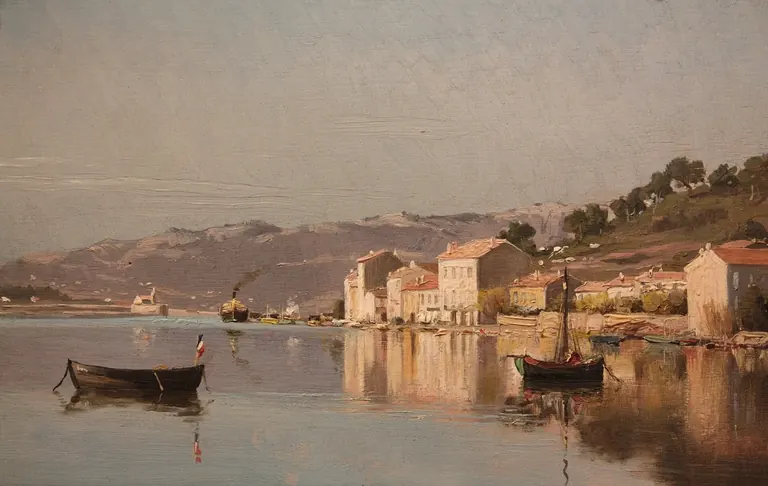
Gustave Fayet, Collector - Designer. Icons of Modern Art
Rediscovery of Gustave Fayet (1865-1925), pioneering collector of van Gogh, Gauguin and Picasso and a prolific designer, drawing on loans from 64 institutions and 71 private collections.
More in Paris
Van Gogh's Self-Portrait with Bandaged Ear and Pipe has not been shown in France since 1937, nor lent to any exhibition since 1990. Gustave Fayet bought it in 1902 from the dealer Émile Schuffenecker. It arrives with nine more Van Goghs, 78 works by Gauguin, including The Yellow Christ, and a large group of Redon.
You start downstairs with the Van Goghs, the self-portrait hung opposite Gauguin's Self-Portrait with a Palette, then climb through Gauguin and Redon in rooms Robert Carsen painted red, grey and green to feel like Fayet's homes. The top floor is Fayet's own work: watercolours grown from blots on blotting paper, ceramics, and his carpets. Each label says when Fayet bought the work, how long he kept it and who owns it now.
Arts in the City, which toured it before opening, called it "un coup d'audace". It runs until 8 March 2027 and is closed Tuesdays. The foundation stays open until 21:00 on Fridays, and the hours are adjusted during school holidays.
Editor's pick
Van Gogh's Self-Portrait with Bandaged Ear and Pipe, unseen in France since 1937, hangs opposite a Gauguin self-portrait. The top floor belongs to Gustave Fayet, who bought the Van Gogh in 1902: carpets grown from blots on blotting paper.
Look for
Van Gogh's Self-Portrait with Bandaged Ear and Pipe
Painted in 1889, Van Gogh with a bandaged ear and a pipe; it is back in France for the first time since 1937.
Gauguin's The Yellow Christ and his self-portrait with it
Gauguin's painting of a yellow crucified Christ hangs beside the portrait in which he stands in front of it.
The pale blue Redon room
An oval room painted pale blue, with a sofa in the middle, gathers Fayet's Redons.
Carsen's red, grey and green rooms
Coloured galleries designed to feel like the private homes where Fayet lived among his pictures.
The carpets under the rose window
At the end of the top floor, Fayet's huge rugs, their flowers grown from his blotting-paper watercolours, lie beneath a rose window.
Good for
- Evening Visits
- First-Timers
- Nerding Out
- Out-Of-Town Guests
Skip if
You only want the famous names: the whole top floor is Fayet's own ceramics, carpets and watercolours.
Also at Fondation Louis Vuitton
On now nearby

Image credits
5
- Gustave Fayet, Collector - Designer. Icons of Modern ArtGustave Fayet, Wikimedia Commons, Public domain
- Five Views, La photographie japonaise émergentePhoto © SHOHEI MIYACHI : UNTITLED, 2024
- Mungo Thomson: Monument© Mungo Thomson. Courtesy l'artiste, galerie frank elbaz, and Karma.
- Nanténé Traoré — pays des merveillesCourtesy of Maison Européenne de la Photographie (MEP)
- Fondation Louis VuittonPiotr Ilowiecki, Wikimedia Commons, CC BY-SA 2.0