 i
Getty CenterBrentwood
Stendahl's World: Marketing Ancient Mexico and Modern Art in Los Angeles
This exhibition has ended.
How Earl Stendahl's Los Angeles gallery marketed pre-Hispanic Mexican antiquities to museums, collectors and Hollywood from the 1940s onward, reshaping the trade in ancient artifacts.
Museum websiteMore in Los Angeles
A local artist remembered joining Earl Stendahl in his basement for "marvelous mendings", gluing ancient fragments into new objects. One is here: a "dog of many parts" in a human mask, which sold for two to three times the price of an intact dog.
You start at a sculpture that isn't ancient at all, a fiberglass replica of a supposed Veracruz figure. Stendahl sold Mexican antiquities from 1935, fakes included, and the show, drawn largely from his gallery's archive, follows the marketing: Man Ray photographing actress Teresa Wright with a Chac Mool, Vincent Price shopping with him. Kahlúa's ads used figures of this type, so the dusty bottle in your cupboard has a provenance question too.
Expect photographs and paperwork more than sculpture, with the looted Mexican sites kept in view. It's free with a timed Getty reservation (parking is paid), in the Research Institute's Gallery I, with labels in English and Spanish. It closes 18 October; the last 30-minute curator tour is Thursday 15 October at 1pm.
Look for
The dog of many parts
Look for a dog figure wearing a human mask, a hybrid made from ancient pieces in Stendahl's basement, because the supernatural touch fetched two to three times an intact dog's price.
The fiberglass Veracruz figure
The sculpture beside the introduction panel is no antiquity but a fiberglass replica of a supposed Veracruz piece, which Stendahl's gallery may have sold.
Actress Teresa Wright with Chac Mool, about 1944
Man Ray's photograph poses the Hollywood actress with a Chac Mool, the kind of celebrity image Stendahl used to sell ancient Mexico.
Vincent Price and the Kahlúa ads
A section on the horror star, a Stendahl customer and collector, who became spokesman for Kahlúa while its ads put pre-Hispanic figures to work.
Good for
- Cheap Culture
- Evening Visits
- Locals Who've Seen It All
- Nerding Out
Skip if
You came for ancient sculpture: the show is drawn largely from a dealer's archive of photographs and paperwork.
Also at Getty Center
On now nearby
Image credits
4
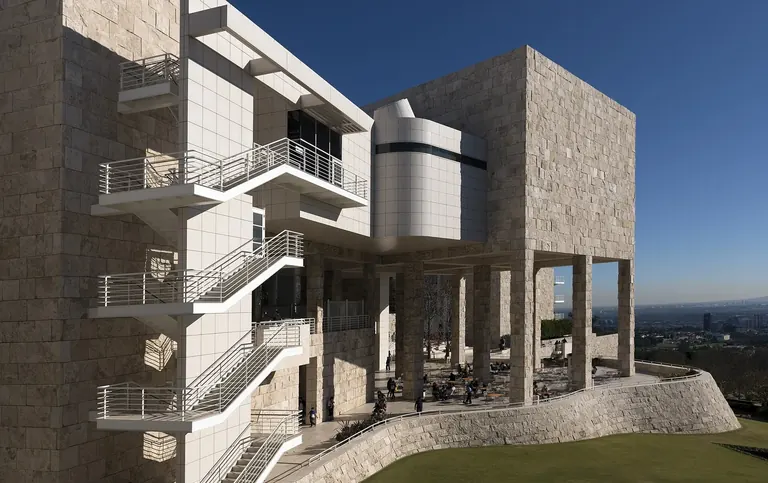
- Getty CenterCarol M. Highsmith / Wikimedia Commons, Public domain
- Sculpted Portraits from Ancient Egypt© The Trustees of the British Museum. All rights reserved
- Stories from the Library: The Mirror of the MoonCourtesy of The Huntington Library, Art Museum, and Botanical Gardens
- The Egyptian Book of the DeadCourtesy of Getty Villa