 i
Autry Museum of the American WestGriffith Park
Life, Liberty, and Los Angeles
Historical and contemporary objects, media and art examine how diverse Angelenos have claimed and contested life, liberty and happiness across two centuries of LA history.
More in Los Angeles
Before you see a single object, you hear voices speaking Tongva, the language of the people whose land Los Angeles sits on, recorded as they work to revive it. Then comes a hand-painted Mexican flag carried at the city's first celebrations of Mexican Independence.
The rooms run by theme, not date. A "City of Dreams" section covers real estate, Hollywood, oil and citrus. Elsewhere are a federal redlining map, the 1942 removal order for Japanese Americans and VHS news footage of 1992. Bob Gurr's 1967 Disneyland Autopia car is here too, and so is a 1970 canister of "Original Undiluted Los Angeles Smog", the city's most honest souvenir.
The show leaves the verdict to you: near the exit, a metal voting station with stubby pencils asks you to choose between vote, educate, organize, campaign and jury. It's in the Marilyn and Calvin Gross Gallery, included in the $20 admission and free on the first Wednesday of each month. Parking is free.
Look for
The hand-painted Mexican flag
Eagle, serpent and nopal cactus on cloth from the 1840s or 1850s, seamed and lightly stained with age, used in LA's early celebrations of Mexican Independence.
Cara Romero, Oil and Gold (2021)
Romero photographs her daughter and Leah Mata Fragua's daughter standing in front of a South Bay oil refinery.
Lilliana Castro, Temaquixtiliztli (2026)
Three women's faces, three generations, carved from salvaged California sequoia, with the grain running across a cheek and a long crack opening at one edge.
The redlining map
A federal HOLC map grades LA neighbourhoods green and blue for safe lending and red for areas to avoid, the system that shut nonwhite residents out.
Two cars, two kinds of LA
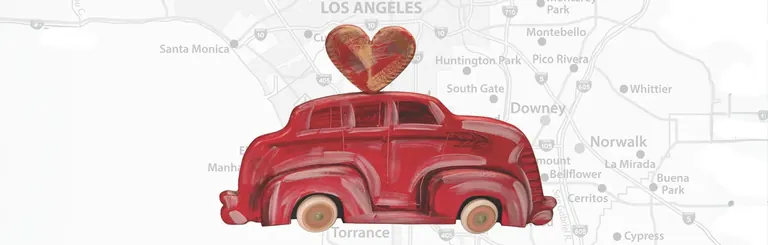
Look for Bob Gurr's 1967 Mark VII Autopia car from Disneyland and Frank Romero's painted wooden Carro con Corazon (Rojo), a red car with a heart on top.
Good for
- Going Solo
- Nerding Out
- Rainy Days
Skip if
You want a light day out: it covers the 1931 deportations, Japanese American removal and 1992.
With kids
Children 3 to 12 pay $9 and under-2s are free. Strollers are allowed (and can be borrowed), and there's a Family Play Space in the lobby.
Also at Autry Museum of the American West
On now nearby
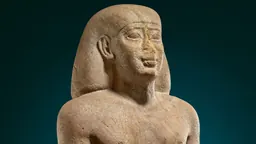
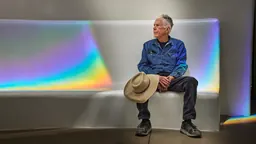
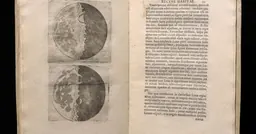
Image credits
5
- Life, Liberty, and Los AngelesCourtesy of Autry Museum of the American West
- Sculpted Portraits from Ancient Egypt© The Trustees of the British Museum. All rights reserved
- Charles Ross: Spectrum 14Courtesy of Getty Center
- Stories from the Library: The Mirror of the MoonCourtesy of The Huntington Library, Art Museum, and Botanical Gardens
- Autry Museum of the American WestJllm06 / Wikimedia Commons, CC BY-SA 4.0