 i
Tate ModernBankside
Light and Magic: The Birth of Art Photography
Around 200 prints by more than 80 artists trace pictorialism, the first international art photography movement, across the globe.
More in London
A corridor on printing methods joins the two halves, with a working darkroom where Tate runs workshops. In the printmaking section, pairs of the same photograph, including Peter Henry Emerson's A Norfolk Boat-Yard (1886), show how much the printing process changes a picture.
Pictorialism, from the 1880s on, was the first big push to treat photography as art rather than record, told here as a global story through 200 prints by more than 80 photographers. You go from Emma Barton's The Awakening (1903) through camera clubs in Shanghai, South Korea and Singapore to Lionel Wendt's solarised portraits and Steichen, Strand and Weston crossing over into Modernism.
Time Out gave it three stars: the photographs mostly compelling, the connections between them less so, and by the final room it's hard to say where pictorialism ends. It's on Level 3, Natalie Bell Building. Tickets are £20 (£5 for 16–25s on Tate Collective); the £5 audio guide plays on your phone, so bring headphones. Open until 21:00 on Fridays and Saturdays.
Look for
The working darkroom
A functioning darkroom set into the show beside the corridor on printing methods, where Tate holds workshops on historic processes.
Emerson's A Norfolk Boat-Yard
Shown in pairs printed by different processes, so you can compare versions of the same 1886 image.
Robert Demachy's ballerinas
Hand-manipulated prints of dancers that Time Out found look more like charcoal drawings than photographs.
Long Chin-san's Pavilion Fairyland
A 1940s landscape that borrows the visual language of Chinese ink painting.
Lionel Wendt's solarised portraits
Sri Lankan portraits from the 1930s, among them a sitter in a patterned garment and pearl necklace, in the final section where Pictorialism meets Modernism.
Good for
- Dates
- Evening Visits
- Nerding Out
Skip if
You want a tight argument: Time Out found the connections between photographs weaker than the photographs themselves.
Free in the same building
- The Collection: Modern and Contemporary ArtFree permanent displays spanning Picasso, Dalí, Rothko and Warhol to the latest contemporary work across two interconnected buildings.
- The TanksThe world's first permanent museum galleries for live art, performance, installation, and film, housed in vast industrial oil tanks.
Also at Tate Modern
On now nearby
Nearby

Image credits
8
- Light and Magic: The Birth of Art Photography© Estate of Lang Jingshan
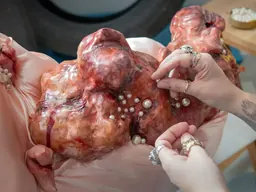
- By Appointment Only: Romani Art, Culture & Heritage© London Museum
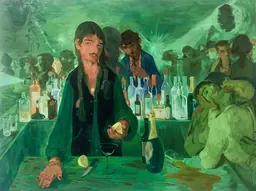
- Salman Toor: Someone Like You© Salman Toor; Courtesy of the artist, Luhring Augustine, New York, and Thomas Dane Gallery. Photo: Genevieve Hanson
- Tate ModernAcabashi / Wikimedia Commons, CC BY-SA 4.0
- Hayward GalleryMykReeve / Wikimedia Commons, CC BY-SA 3.0
- London MuseumMatt Brown / Wikimedia Commons, CC BY-SA 4.0
- Courtauld GalleryAnthony O'Neil / Wikimedia Commons, CC BY-SA 2.0
- Barbican CentreJulian Herzog / Wikimedia Commons, CC BY 4.0