 i
National GalleryWest End
Yinka Shonibare and Thomas Gainsborough: A Conversation
Yinka Shonibare's contemporary response shown alongside Thomas Gainsborough's 'Mr and Mrs Andrews'. Free to all visitors.
Guided tours of National Gallery
More in London
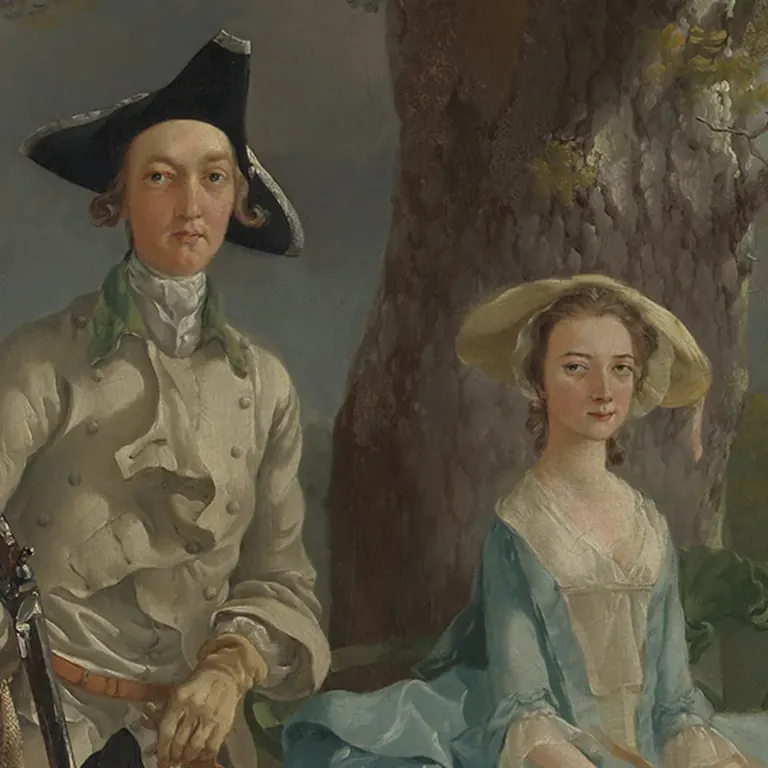
In Gainsborough's painting from about 1750, a richly dressed husband and wife pose in front of their Suffolk estate. In Yinka Shonibare's 1998 version, they have no heads and no land, and their clothes are made of West African Dutch wax cloth.
It is those two works in Room 1, the H J Hyams Room, together for the first time to mark 300 years since Gainsborough's birth. You walk in to the painting alone on one wall and the life-sized couple across the room, with empty space where the fields should be. Shonibare first saw the painting at art college and picked it, he says, as "an icon of Britishness". The missing heads point to the executions of the French Revolution, and the cloth to the colonial trade that ran through 18th-century Britain.
Rosie Millard called it "a lovely, short experience". One blogger found the headless pair "threatening and stressful" rather than playful, and was alone in the room at noon. It's free, just inside the main entrance.
Look for
Mr and Mrs Andrews without their Heads
Shonibare's life-sized headless couple in Dutch wax cotton, on loan from the National Gallery of Canada in Ottawa.
Gainsborough's Mr and Mrs Andrews
Look at how the couple's status is carried by their clothes and their land, the two things Shonibare took away.
Mrs Andrews's empty lap
A patch of bare, unpainted canvas sits in her lap, which Rosie Millard suggests may have been meant for a pheasant.
The sculpture's replica gun
Shonibare's Mr Andrews carries a replica gun, which IanVisits reports needed clear labelling and paperwork to get through customs at Heathrow.
Good for
- An Hour Or Less
- Cheap Culture
- Out-Of-Town Guests
Skip if
You want a Gainsborough retrospective: this is one painting and one sculpture in a single room.
Also at National Gallery
On now nearby
Nearby

Image credits
9
- Yinka Shonibare and Thomas Gainsborough: A ConversationCourtesy of National Gallery
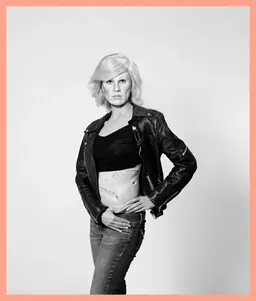
- Gillian Wearing: Spiritual FamilyGillian Wearing ('Me as Warhol in Drag with Scar'), by Gillian Wearing, 2010, NPG P2104 © Gillian Wearing, courtesy Maureen Paley, London, Tanya Bonakdar Gallery, New York and Regen Projects, Los Angeles
- Winston Taylor Photo Portrait Prize 2026Courtesy of National Portrait Gallery
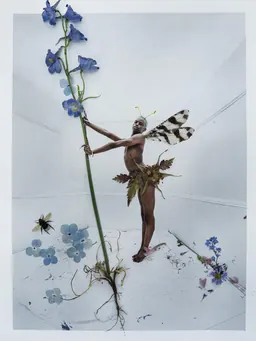
- Tim Walker's Fairyland: Love and LegendsCourtesy of National Portrait Gallery
- National GalleryCarlos Delgado / Wikimedia Commons, CC BY-SA 3.0
- National Portrait GalleryIstvánka / Wikimedia Commons, CC BY-SA 4.0
- London Transport MuseumColin Park / Wikimedia Commons, CC BY 2.0
- Churchill War RoomsJenny Poole / Wikimedia Commons, CC BY-SA 2.0
- Royal Academy of ArtsYair Haklai / Wikimedia Commons, CC BY-SA 4.0