 i
Richard H. Driehaus MuseumRiver North / Near North Side
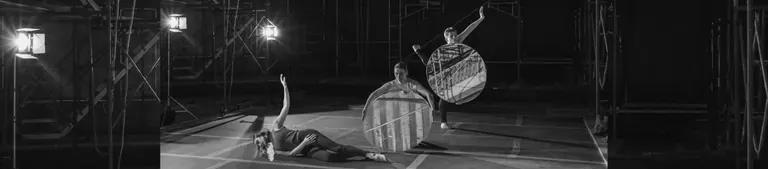
A Tale of Today Presents Brendan Fernandes: In the Round
The museum's first artist-in-residence turns the 1926 Murphy Auditorium into a site for sculptural installation, sound and dance, unfolding as episodic performances through 2026.
More in Chicago
Seven dancers circle a ring of 12 mirrored benches in the middle of a 1926 auditorium, leaving handprints, footprints and humidity marks on the surfaces. At one preview, WBEZ reported, the audience murmured about whether there's a Windex budget.
This is the Driehaus's first artist residency, and Fernandes borrows from the Judson Dance Theater, which made dance out of everyday gesture in a New York church in the 1960s. The Murphy Auditorium, modelled on a Paris church, keeps its choir stalls, organ console and oculus. The dance is semi-improvised and there are no fixed seats: you walk in, pick the floor or the balcony, and leave when you like. Alex Inglizian's score drifts from droning organ tones to quick piano.
Time it right, because this is a dance residency first. Two performance weeks remain, 14 to 17 October and 11 to 14 November, and in those weeks you can drop in between shows and catch rehearsals. Entry comes with museum admission, free to $23.
Editor's pick
The museum's first artist-in-residence turns the 1926 Murphy Auditorium into a site for sculptural installation, sound and dance, unfolding as episodic performances through the year.
Look for
The mirrored dodecagon
Look for the 12 mirror-finish benches of repurposed steel ringed in the centre of the main floor, built with AIM Architecture and smudged with the dancers' handprints.
The flocking pattern
One dancer sets a short phrase, the others copy it, then the lead passes to someone else, so the group keeps re-forming around the benches.
"Bigger!" "Slower." "Smaller."
In one passage the dancers mimic each other's gestures and resize them on spoken prompts, moving on, under and around the bench.
The quilted textiles
Watch for the quilted fabrics the dancers sometimes pick up, part of the textile works Fernandes made with Philadelphia's Fabric Workshop and Museum.
The room itself
Look up at the circular oculus that first sparked the piece, then around at the choir stalls, Tiffany Studios bronze doors and stained glass.
Good for
- Locals Who've Seen It All
- Out-Of-Town Guests
Skip if
You want a show to sit through: the dance is improvised, with no seats and no beginning or end.
Also at Richard H. Driehaus Museum
On now nearby

Nearby
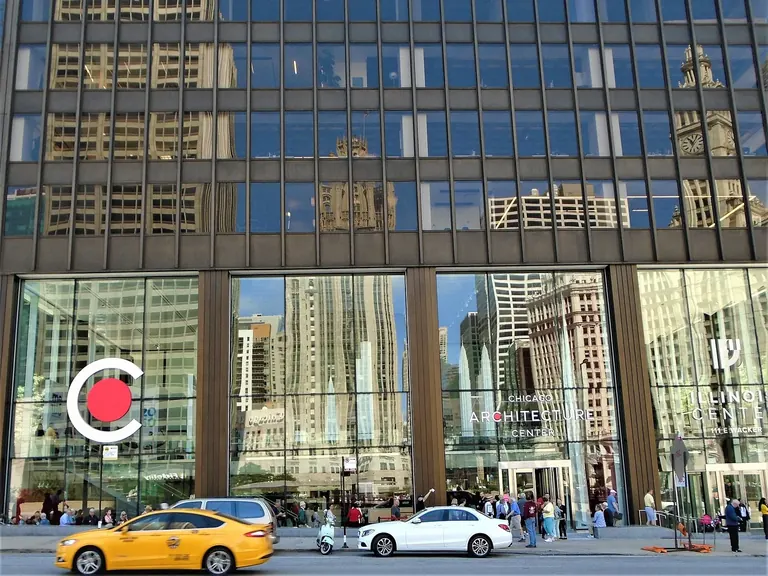
Image credits
7
- A Tale of Today Presents Brendan Fernandes: In the RoundCourtesy of Richard H. Driehaus Museum
- Kenzi ShiokavaPhoto: Brian Forrest
- Chicago Works | Mike Cloud: Worldless ObstructionCourtesy of Museum of Contemporary Art Chicago
- Slow DanceCourtesy of the artist.
- Richard H. Driehaus MuseumLmh9y6 via Wikimedia Commons, CC BY-SA 3.0
- Museum of Contemporary Art ChicagoCéline from Paris, France, via Wikimedia Commons, CC BY-SA 2.0
- Chicago Architecture CenterAlanscottwalker / Wikimedia Commons, CC BY-SA 4.0