 i
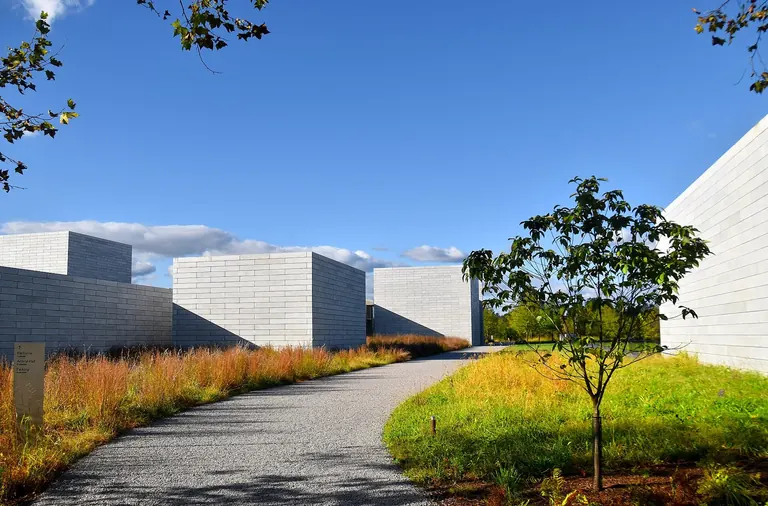
Glenstone Museum
Founded in 2006 by Mitchell and Emily Wei Rales, Glenstone sets roughly 1,300 works of post-war and contemporary art into 230 acres of meadow, woodland and stream about 25 km northwest of downtown Washington. Its centrepiece is the Pavilions, a 204,000-square-foot building by Thomas Phifer completed in 2018, where eleven single-artist rooms of cast-concrete blocks ring an 18,000-square-foot Water Court open to the sky. Outside, trails wind past monumental works by Jeff Koons, Richard Serra, Andy Goldsworthy and Felix Gonzalez-Torres, with landscape design by Peter Walker and some 8,000 newly planted trees. Admission and parking are always free, but a timed ticket booked in advance is required — the museum caps entry at around 600 visitors a day and admits no one under 12.
More in Washington, DC
What's On
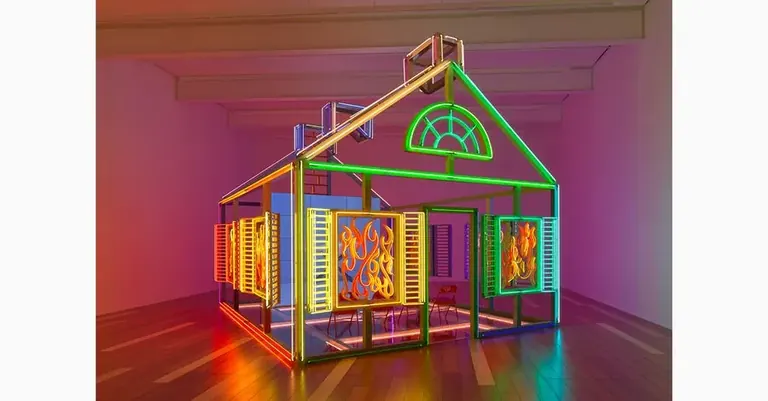
Alex Da Corte
Recent works by Alex Da Corte in Room 6, including Rubber Pencil Devil (Hell House), 2022 — a neon sculpture commissioned by Glenstone to house his 2018 video of Americana turned uncanny.
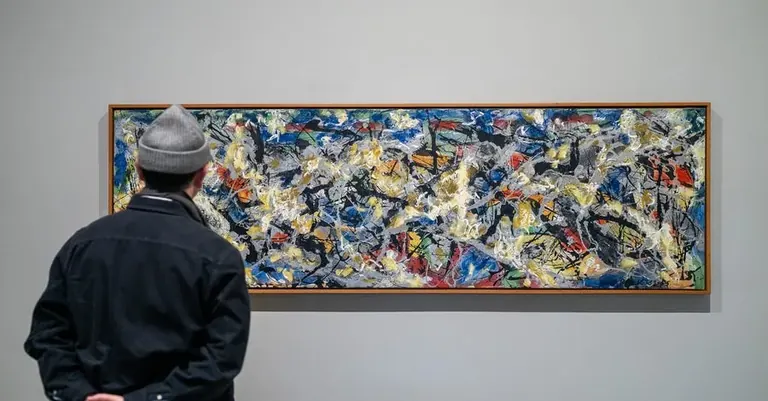
Ties of our common kindred
Marking the 250th anniversary of the Declaration of Independence with a century of American art from Glenstone's collection — Pollock, de Kooning, Ruth Asawa, Kerry James Marshall, Cindy Sherman, Warhol.
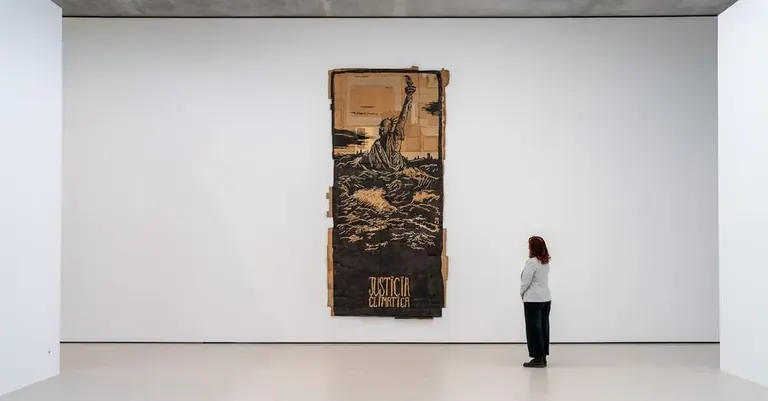
Andrea Bowers
One of the largest presentations of Andrea Bowers's work to date — over 40 videos, neons, sculptures and cardboard drawings tracing ecological activism and bodily autonomy, in Room 2 of the Pavilions.

Nick Cave: Louder Still
Louder Still (2025), commissioned by Glenstone, is Nick Cave's largest multi-figure Soundsuit to date: eleven forms joined by a textile of hand-sewn mother-of-pearl buttons, headpieces shaped like gramophone horns.
Permanent Collections
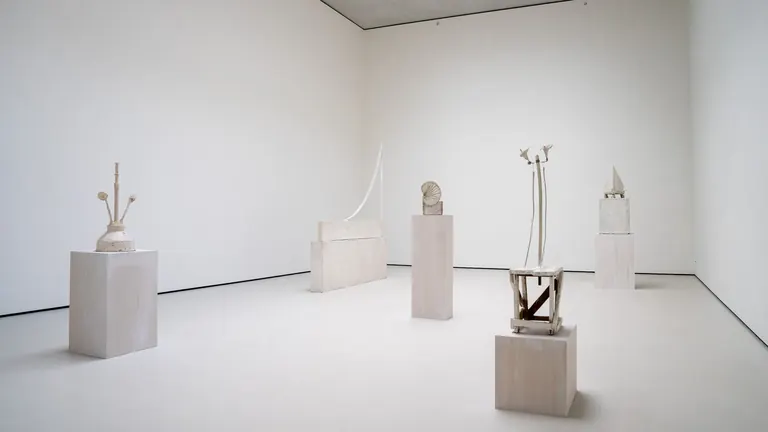
Cy Twombly: Sculpture
Five white-painted sculptures by Cy Twombly, 1951–1981, of wood, metal and found objects, chosen with the artist before his death, in Room 11 of the Pavilions.
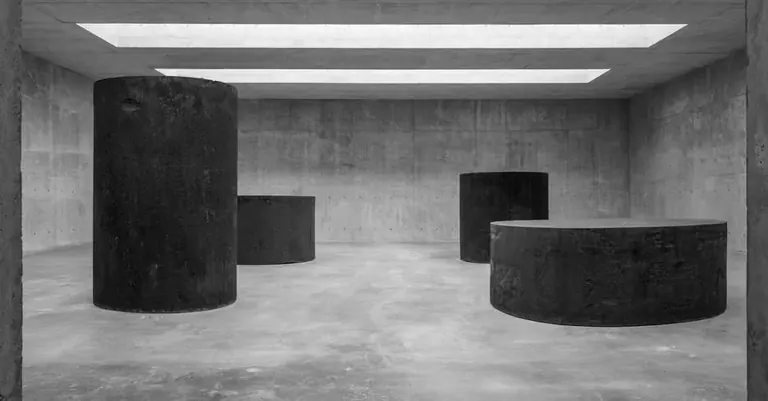
Richard Serra: Four Rounds: Equal Weight, Unequal Measure
Four forged-steel cylinders of equal weight but differing proportions by Richard Serra, 2017, in their own purpose-built pavilion on the Glenstone grounds. Open daily 10:30–16:30.
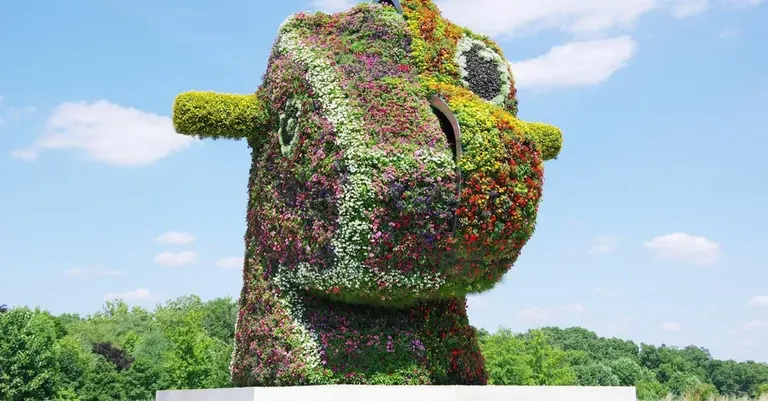
Jeff Koons: Split-Rocker
Jeff Koons's Split-Rocker, 2000: a 37-foot topiary head splitting two children's toys, planted with live flowers over a stainless-steel armature and internal irrigation system.
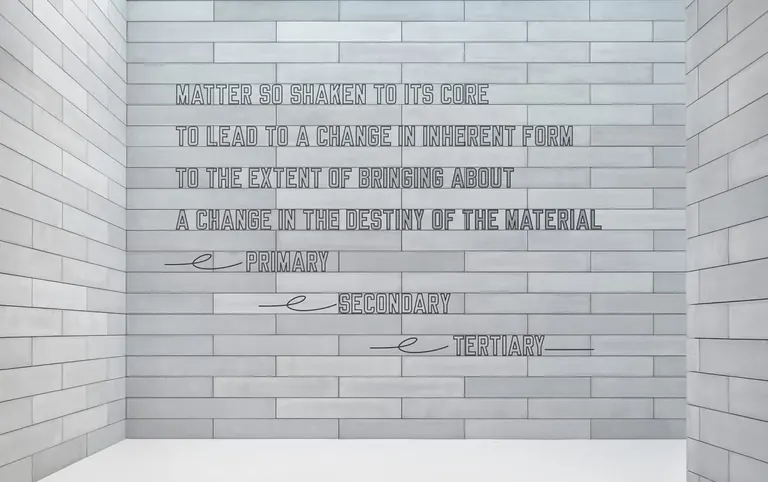
Lawrence Weiner: MATTER SO SHAKEN TO ITS CORE
Lawrence Weiner's 2002 text work MATTER SO SHAKEN TO ITS CORE…, adapted by the artist so each line fits one precast concrete block of the Pavilions entry.
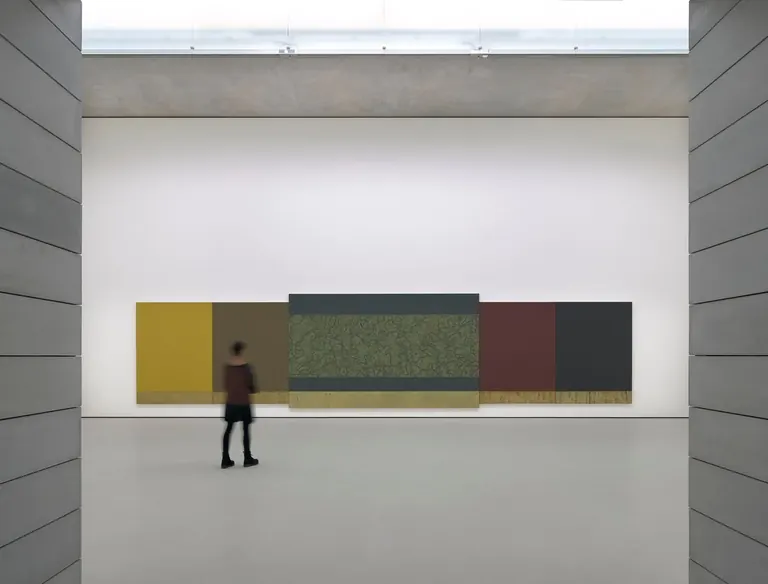
Brice Marden: Moss Sutra with the Seasons
Brice Marden's five-panel Moss Sutra with the Seasons, 2010–2015, commissioned for Glenstone and hung in a skylit Room 10 designed with the artist.
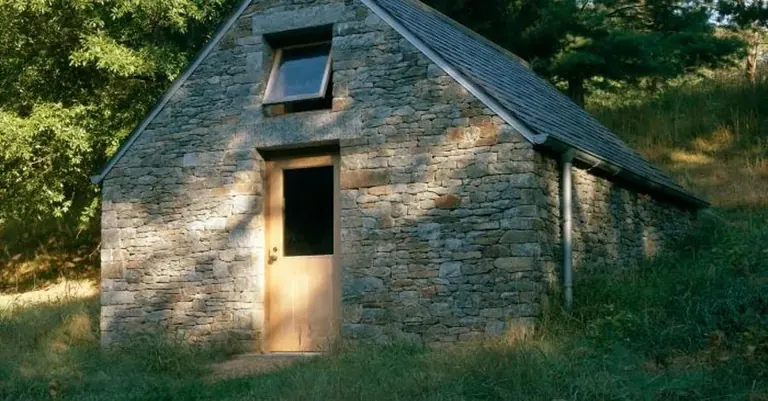
Andy Goldsworthy: Clay Houses (Boulder-Room-Holes)
Three mica-schist huts by Andy Goldsworthy, 2007, each lined with cracked clay mixed with hair, set in the Glenstone woods. Open daily 12:30–13:30 and 14:00–15:00.
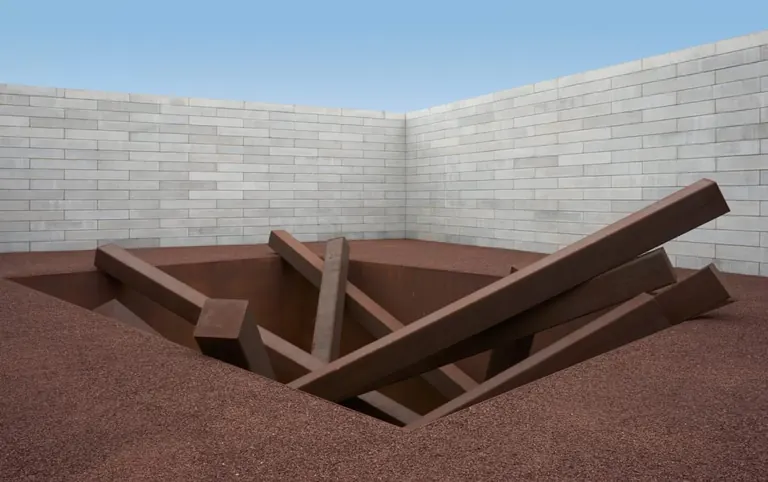
Michael Heizer: Collapse
Michael Heizer's Collapse, 1967/2016: fifteen weathering-steel beams tumbling into a box sunk in the earth, commissioned for Glenstone and reached only from inside the Pavilions, Room 5.
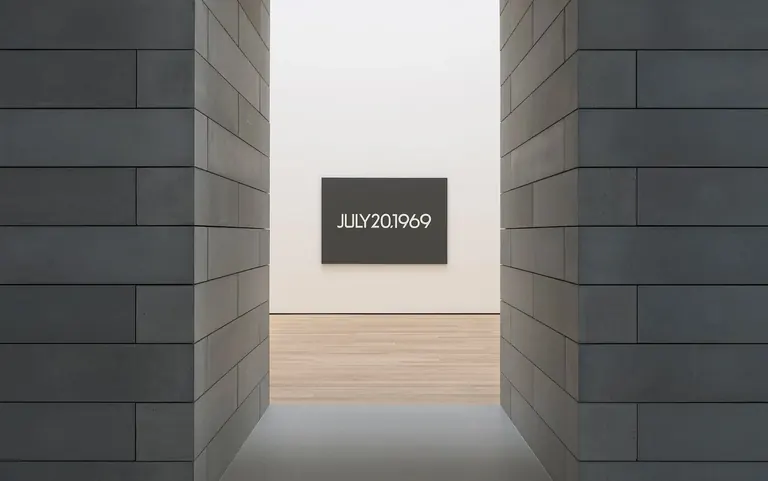
On Kawara: Moon Landing
Three of On Kawara's Today date paintings marking the Apollo 11 launch, landing and first steps in July 1969, in a skylit Room 3 designed with the artist and his estate.
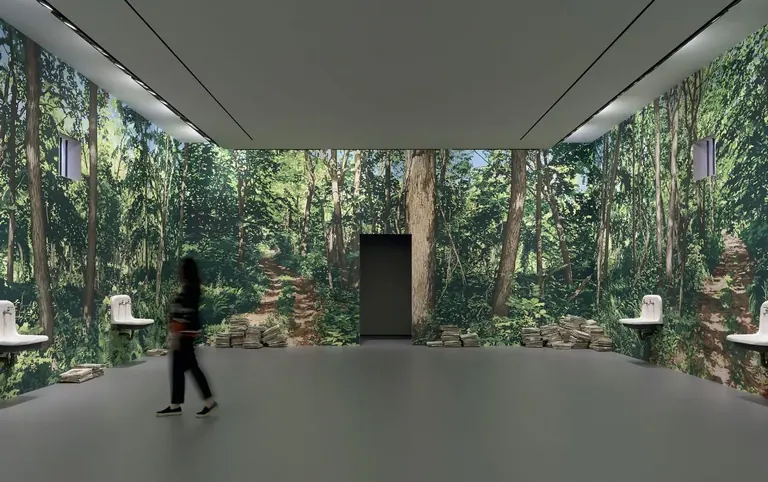
Robert Gober: Untitled
Robert Gober's room-sized Untitled, 1992–2007: a hand-painted forest mural, running sinks, barred "prison windows" onto a painted sky, newspapers and rat bait, in Room 4.
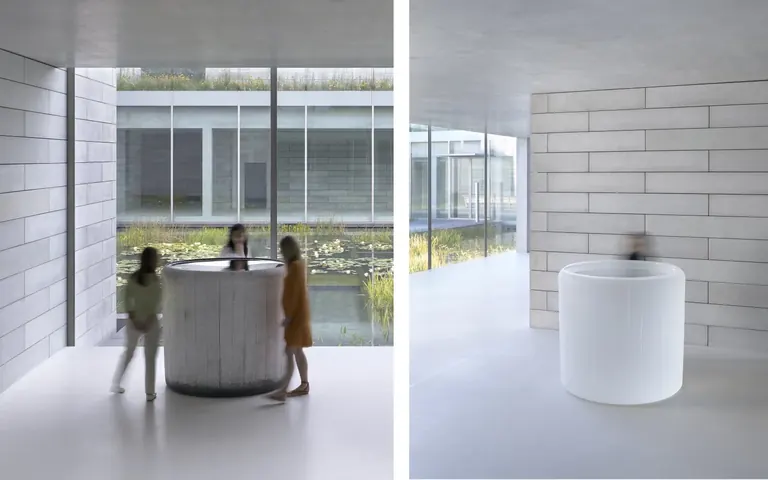
Roni Horn: Water Double, v. 3
Roni Horn's Water Double, v. 3, 2013–2015: a pair of solid cast-glass forms, one clear and one matte black, that take in the light and Water Court of the Pavilions Passage.
Plan Your Visit
Getting there
12100 Glen Road, Potomac, MD 20854, United States
Nearest station: No Metro station nearby — Glenstone is a car or bus trip from DC (30–45 minutes from downtown without traffic), Montgomery County Ride On bus route 301 stops on the Glenstone grounds; arriving by this bus earns guaranteed walk-in entry and No museum shuttle from Washington, DC; on-site parking is free
Show on mapHours
Closed 26 November
Closed - Thanksgiving
| Mon | Closed |
| Tue | Closed |
| Wed | Closed |
| Thu | 10:00–17:00 |
| Fri | 10:00–17:00 |
| SatToday | 10:00–17:00 |
| Sun | 10:00–17:00 |
Admission
Free
Admission and parking are always free, but a timed ticket must be booked in advance. Tickets are released on the 1st of each month at 10 a.m. for that month and the following month. Visitors must be 12 or older. Arriving on Ride On bus route 301 earns guaranteed walk-in entry; no ticket is needed for the Bookstore in the Arrival Hall.
Last verified
Visitor Information
- Is Glenstone Museum free to visit?
- Yes, general admission to Glenstone Museum is free. Admission and parking are always free, but a timed ticket must be booked in advance. Tickets are released on the 1st of each month at 10 a.m. for that month and the following month. Visitors must be 12 or older. Arriving on Ride On bus route 301 earns guaranteed walk-in entry; no ticket is needed for the Bookstore in the Arrival Hall.. Some special exhibitions may charge a separate ticket, so check the museum's website before visiting.
- What are the opening hours of Glenstone Museum?
- Glenstone Museum is open Open Thursday–Sunday 10:00–17:00; closed Monday, Tuesday and Wednesday. Gates open at 09:45; last ticketed admission 15:15 and last guaranteed entry 16:15. The Woodland trail closes at 17:00 or sunset, whichever comes first; the Café serves 10:30–16:00. Closed on Thanksgiving, Christmas Day and New Year's Day. Some trails and outdoor sculptures close in extreme heat, extreme cold or thunderstorms.. Holiday hours can vary, so check the museum's website before you go.
- Where is Glenstone Museum?
- Glenstone Museum is located at 12100 Glen Road, Potomac, MD 20854, United States, in the Potomac, Maryland area of Washington, DC. The nearest stations are No Metro station nearby — Glenstone is a car or bus trip from DC (30–45 minutes from downtown without traffic), Montgomery County Ride On bus route 301 stops on the Glenstone grounds; arriving by this bus earns guaranteed walk-in entry and No museum shuttle from Washington, DC; on-site parking is free.
- What can I see at Glenstone Museum?
- Mitchell and Emily Rales's 230-acre art landscape in the Maryland woods: Thomas Phifer's Pavilions, postwar masterworks, always free. Current highlights include Cy Twombly: Sculpture, Alex Da Corte and Nick Cave: Louder Still.
- Do I need to book Glenstone Museum in advance?
- Glenstone Museum is free to enter and most days you can walk in. Admission and parking are always free, but a timed ticket must be booked in advance. Tickets are released on the 1st of each month at 10 a.m. for that month and the following month. Visitors must be 12 or older. Arriving on Ride On bus route 301 earns guaranteed walk-in entry; no ticket is needed for the Bookstore in the Arrival Hall.. For special exhibitions, weekends, and school holidays, booking a timed slot can help you skip queues. Check the museum's website for current requirements.
- When is the best time to visit Glenstone Museum?
- Weekday mornings shortly after opening are typically the quietest, especially mid-week. Late afternoons can also be calmer. Weekends, school holidays, and the lunch rush are the busiest periods.
Image credits
15
- Glenstone MuseumRon Cogswell, Wikimedia Commons, CC BY 2.0
- Cy Twombly: SculptureGlenstone Museum / © Cy Twombly Foundation
- Alex Da CorteGlenstone Museum
- Nick Cave: Louder StillGlenstone Museum
- Richard Serra: Four Rounds: Equal Weight, Unequal MeasurePhoto Cristiano Mascaro / Glenstone Museum, © Richard Serra / ARS, New York
- Jeff Koons: Split-RockerGlenstone Museum / © Jeff Koons
- Lawrence Weiner: MATTER SO SHAKEN TO ITS COREGlenstone Museum / © Lawrence Weiner / ARS, New York
- Brice Marden: Moss Sutra with the SeasonsGlenstone Museum / © Brice Marden
- Andy Goldsworthy: Clay Houses (Boulder-Room-Holes)Photo Jerry Thompson, courtesy Galerie Lelong & Co. / © Andy Goldsworthy
- Andrea BowersGlenstone Museum
- Michael Heizer: CollapseGlenstone Museum / © Michael Heizer
- On Kawara: Moon LandingGlenstone Museum / © One Million Years Foundation
- Robert Gober: UntitledGlenstone Museum / © Robert Gober
- Roni Horn: Water Double, v. 3Glenstone Museum / © Roni Horn
- Ties of our common kindredGlenstone Museum