 i
Mercer Union, a Centre for Contemporary ArtBloordale Village
Rouzbeh Akhbari: Of Wool and Diesel
A film installation tracing sheep smuggling and seafaring histories along a trade corridor from Azerbaijan to Oman, with archival material and handmade felt works.
More in Toronto
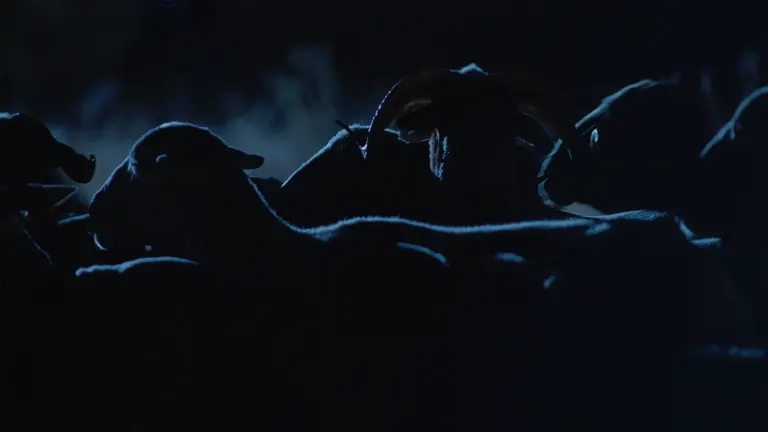
Dozens of small speedboats pull into the port of Khasab, Oman, and they keep coming. CBC Arts' Chris Dart wrote that it looks like an editing trick. It isn't: before the current conflict, about 2,000 boats a day crossed the Strait of Hormuz here, many carrying sheep bought for about $50 in Iran and sold for around $500 in Kuwait.
Akhbari's film follows that route from Astara, Azerbaijan, through a shepherd, a smuggler, a historian, an underwriter and a pair of lovers. Underfoot are namad felt rugs patterned with marine navigation lights, made from wool that came through the same smuggling networks. Along the walls, postcards of 19th-century British survey drawings light up in rhythm with the film. You can take one home.
The film includes a voice-over about smugglers killed by a navy ship. Entry is free, Tuesday to Saturday 11am to 6pm, plus Sundays 18 October and 20 December, near Lansdowne station. It's part of the Toronto Biennial of Art.
Look for
The speedboat armada at Khasab
Look for the shot of small speedboats arriving in port one after another, so many that CBC's writer thought it looked like an editing trick.
The navigation-light namads
On the floor, traditional Persian felt rugs carry diagrams of maritime navigation lights instead of ornate motifs, made from wool sourced through the sheep-smuggling trade itself.
The take-home postcards
A row of postcards along the walls reproduces 19th-century British hydrographic drawings of the Gulf, with gaps for uncharted coast, lit on and off in rhythm with the film.
The Lisbon ship
In animated sequences, the grand interior of the Lisbon Geographical Society becomes a distressed vessel adrift in the strait, loaded with replicas of documents from Akhbari's research.
Good for
- Cheap Culture
- Locals Who've Seen It All
- Nerding Out
Skip if
You want paintings or objects to browse: the show is built around one film.
On now nearby
Nearby
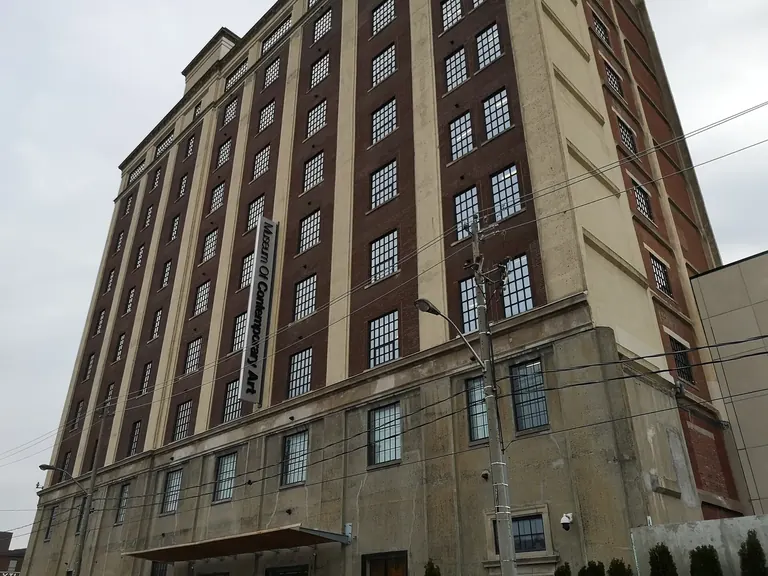
Image credits
6
- Rouzbeh Akhbari: Of Wool and DieselCourtesy of Mercer Union, a Centre for Contemporary Art
- Bharti Kher: BonesCourtesy of Museum of Contemporary Art Toronto (MOCA)
- Delcy Morelos: OmbligoPhoto: LF Documentation
- Beverly Glenn-Copeland: Light of the HeavensCourtesy of the artist, Third Side Music Inc., and Transgressive Records
- Mercer Union, a Centre for Contemporary ArtWilliam Mewes (Flickr), CC BY 2.0
- Museum of Contemporary Art Toronto (MOCA)Leventio / Wikimedia Commons, CC BY-SA 4.0