 i
Norton Simon MuseumPasadena
Making History: Manet's "Execution of Maximilian" from the National Gallery, London
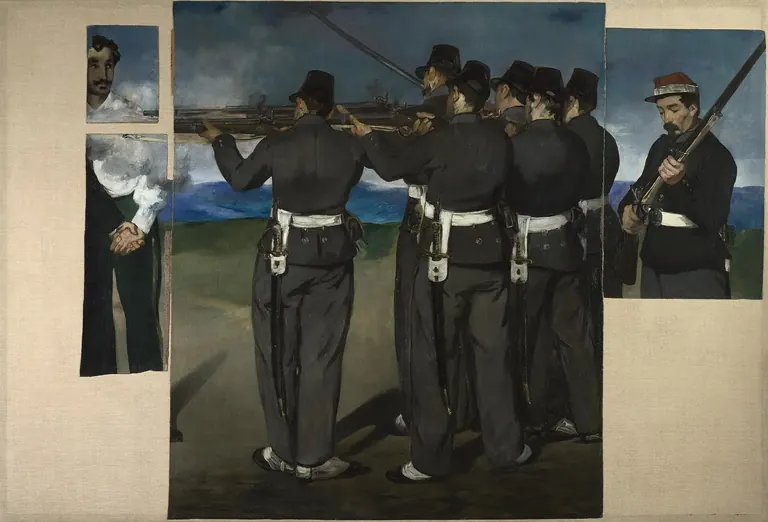
Manet's ambitious, near-life-sized painting of the 1867 firing-squad execution of Emperor Maximilian, on loan from the National Gallery, London.
More in Los Angeles
Preview: written before the show opened
Manet cut the emperor out of his own painting. He removed the leftmost figures, Mejía and Maximilian, and left Maximilian as a hand clasping General Miramón's. After Manet died in 1883 his heirs cut up the rest and sold the pieces separately. Degas bought them and put the fragments back together on one canvas.
That canvas, 193 by 284 cm, is the second of five versions Manet made of the 1867 firing-squad execution of Maximilian, the Austrian archduke who had become emperor of Mexico. The National Gallery, London, bought it at Degas's studio sale in 1918 and has lent it. Around it hang archival materials from the Getty Research Institute on the French occupation of Mexico and on how images of Maximilian and his associates circulated after their deaths.
The show is included with museum admission ($20 for adults). The museum is open Thursday to Monday from noon, to 7pm on Fridays and Saturdays, and closed Tuesday and Wednesday.
Editor's pick
Degas gathered the cut-up fragments of Manet's canvas and reassembled them on one support, so Maximilian survives only as a hand gripping a general's. The National Gallery's loan hangs with Getty Research Institute archive material.
Look for
The reunited fragments
The pieces of the firing squad that Manet's heirs sold off are mounted together on one canvas, the arrangement Degas made.
The hand clasping Miramón's
After Manet's own cropping, the emperor is represented only by his hand holding that of General Miramón.
The Getty Research Institute archive
Documents on the French occupation of Mexico in the 1860s, and on how images of Maximilian and his associates spread after their deaths.
Good for
- Locals Who've Seen It All
- Nerding Out
- Out-Of-Town Guests
Also at Norton Simon Museum
On now nearby

Image credits
5
- Making History: Manet's "Execution of Maximilian" from the National Gallery, LondonÉdouard Manet / Wikimedia Commons, Public domain
- Sculpted Portraits from Ancient Egypt© The Trustees of the British Museum. All rights reserved
- Charles Ross: Spectrum 14Courtesy of Getty Center
- Stories from the Library: The Mirror of the MoonCourtesy of The Huntington Library, Art Museum, and Botanical Gardens
- Norton Simon MuseumJoe Mabel / Wikimedia Commons, CC BY-SA 4.0