 i
Fowler Museum at UCLAWestwood
Mountain Spirits: Rice and Indigeneity in the Northern Luzon Highlands, Philippines
Carved guardians, ritual bowls, textiles and video reveal how the Ifugao people's rice terraces entwine sustenance and spirituality.
More in Los Angeles
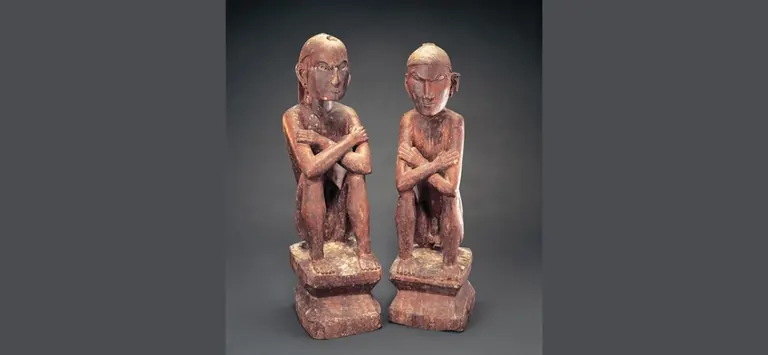
Marlon Martin, who helps run the Save the Ifugao Terraces Movement, went through the Fowler's storerooms and picked 450 Ifugao objects to put on view. The museum's limit was 120. The 110 that made the cut are here, next to panoramic video of the terraces they came from.
You move through three galleries. First comes tawid, inheritance: farming tools made for steep mountain fields. Then baki, the belief system, with bulul rice guardians, ritual boxes and rice wine bowls used by the mumbaki, the priests who bless the harvest. The last room covers the kadangyan elite, whose feasts held villages together. Underneath runs UCLA radiocarbon research dating the terraces to the 16th century, built to stay out of Spanish reach, not 2,000 years ago. If your tita swears they're 2,000 years old, you now have dates for the next family party.
Admission is free and the museum opens Wednesday to Sunday. Gallery walk-throughs run 12 November and 10 December, 1 to 2pm.
Editor's pick
Carved bulul figures, guardians of the rice harvest, lead 110 objects chosen by Marlon Martin, with a hagabi ceremonial bench and a model Ifugao house. UCLA radiocarbon work dates the terraces to the 16th century, not 2,000 years ago.
Look for
The bulul rice guardians
Look for the carved wooden figures in the ritual gallery, consecrated guardians the Ifugao treat as ancestral presences watching over the rice.
The hagabi ceremonial bench
The bench that marks a kadangyan, the elite whose sponsored feasts held the community together; the curators name it one of the show's three key pieces.
The model of an Ifugao bale
A model of a traditional Ifugao house, which the curators chose to stand for the architecture of terrace life.
Paul Connor's film from Ifugao
Footage shot in the terraces that shows baskets, bowls and ritual objects like the ones on display in use at planting, harvest, storage and offerings to the ancestors.
Ikat textiles
Finely woven ikat cloths that the museum ties to Ifugao myth and ritual, shown in the gallery alongside the bulul guardians and rice wine bowls.
Good for
- Cheap Culture
- Locals Who've Seen It All
- Nerding Out
With kids
On 8 November, 1 to 3pm, a family story time has co-curator Gassia Armenian reading Benita and the Binobodan, an Ifugao picture book about a girl who learns to weave (RSVP).
Also at Fowler Museum at UCLA
On now nearby
Nearby
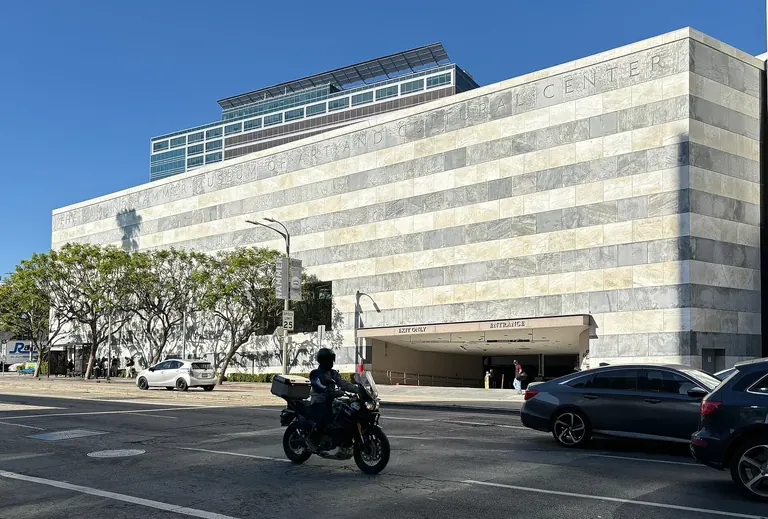
Image credits
6
- Mountain Spirits: Rice and Indigeneity in the Northern Luzon Highlands, PhilippinesCourtesy of Fowler Museum at UCLA
- Hammer Projects: Mike CloudPhoto: Jeff McLane
- Hammer Projects: Vibeke MasciniCourtesy of the artist. Photo: Baroeg Mulder
- Hammer Projects: Gê VianaCourtesy of the artist and Mitre Galeria
- Fowler Museum at UCLAFuzzy901 / Wikimedia Commons, CC BY-SA 3.0
- Hammer MuseumAlexis Doine / Wikimedia Commons, CC0