 i
National Museum of ScotlandOld Town
Roman Scotland: Life on the Edge of Empire
Rome's most northerly frontier brought to life, centred on finds from the Inveresk fort, including two altars from the world's most northerly Mithraeum shown for the first time.
More in Edinburgh
Preview: written before the show opened
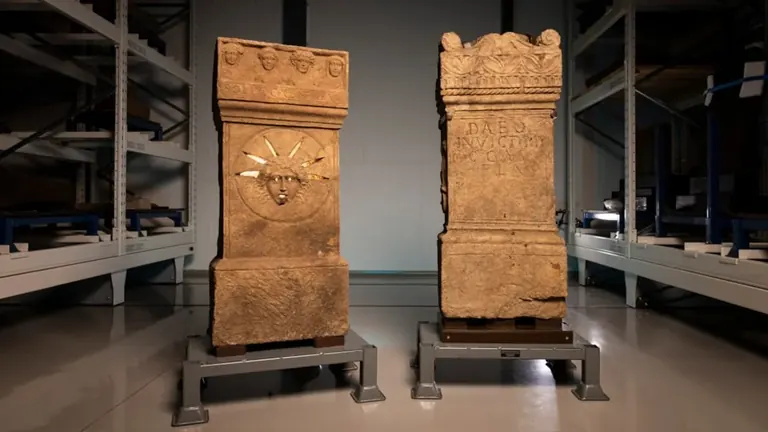
One of the two altars at the centre of this show carries the face of the sun god Sol, carved so that a lamp behind the stone made his eyes, mouth and crown of rays glow in a dark underground temple. Look closely and you can find traces of the paint that once covered it. Both altars come from Inveresk, by Musselburgh, the most northerly known temple to Mithras in the Roman empire, and neither has been shown before.
The show takes on the idea that Rome stopped at Hadrian's Wall: three times the empire pushed north, as far as the central belt and the north-east. Inveresk anchors it, a 2nd-century fort ringed by a town of soldiers' families, traders, craftworkers and enslaved people, with loans from across Europe alongside. Rome's furthest-flung Mithras temple turned up in a town Edinburgh mostly drives to for ice cream.
Adult tickets are £13.50 booked in advance and £15 on the day, at nms.ac.uk/RomanScotland. The rest of the museum stays free.
Editor's pick
The sun god on one altar is carved so a lamp behind the stone lit up his eyes, mouth and rays. Both altars come from Inveresk, by Musselburgh, site of the most northerly known temple to Mithras.
Look for
The Sol altar
The sun god's face, with eyes, mouth and solar rays cut to glow when lit from behind, framed by the four seasons carved as female deities.
The Mithras altar
Look for Apollo's griffin, lyre and plectrum and two ravens, dedicated by a centurion abbreviated on the stone as G CAS FLA.
The Pathhead brooch
Only 6cm long, with tiny blocks of red and yellow enamel set in zig-zags and a head shaped after older Celtic art.
Good for
- Nerding Out
- Out-Of-Town Guests
With kids
Children aged 5 to 15 are £9 in advance and under-5s go free; under-16s must come with an adult. Booking up to five tickets as a family takes 10% off.
Free in the same building
- Evolving EarthNew permanent display on how minerals diversified over time, from diamonds in the Allende meteorite and a lunar meteorite to human-made minerals of the Anthropocene.
- Natural World galleriesHundreds of animals illustrate the variety of life on Earth, with a Tyrannosaurus rex cast guarding the entrance and Animal World exploring behaviour from the Arctic to Australia.
- Science and Technology galleriesSix galleries over three levels on communications, transport, engineering, energy and medicine, with hands-on exhibits and Dolly, the first mammal cloned from an adult cell.
- Scottish History and Archaeology galleriesScotland from prehistory to today, including the Kingdom of the Scots gallery and the Lewis chess pieces, carved from walrus ivory in the 12th century.
- World Cultures galleriesPeoples, cultures and objects from around the globe, including the Patterns of Life gallery on how people and their possessions interact across four continents.
Also at National Museum of Scotland
On now nearby

Nearby
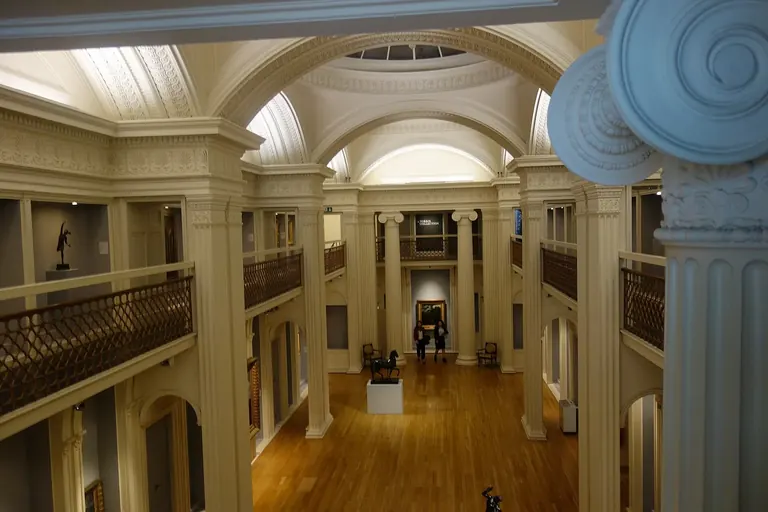
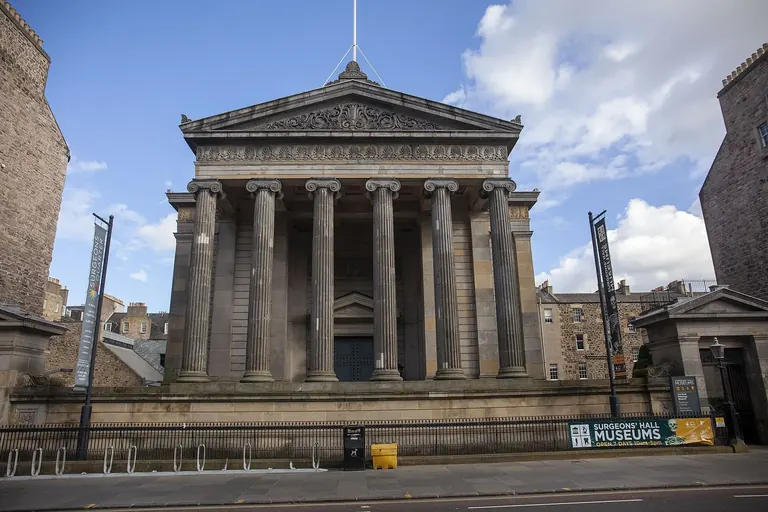
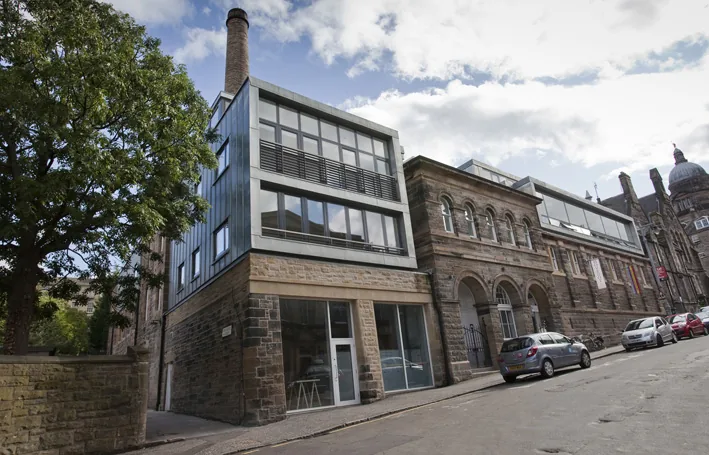
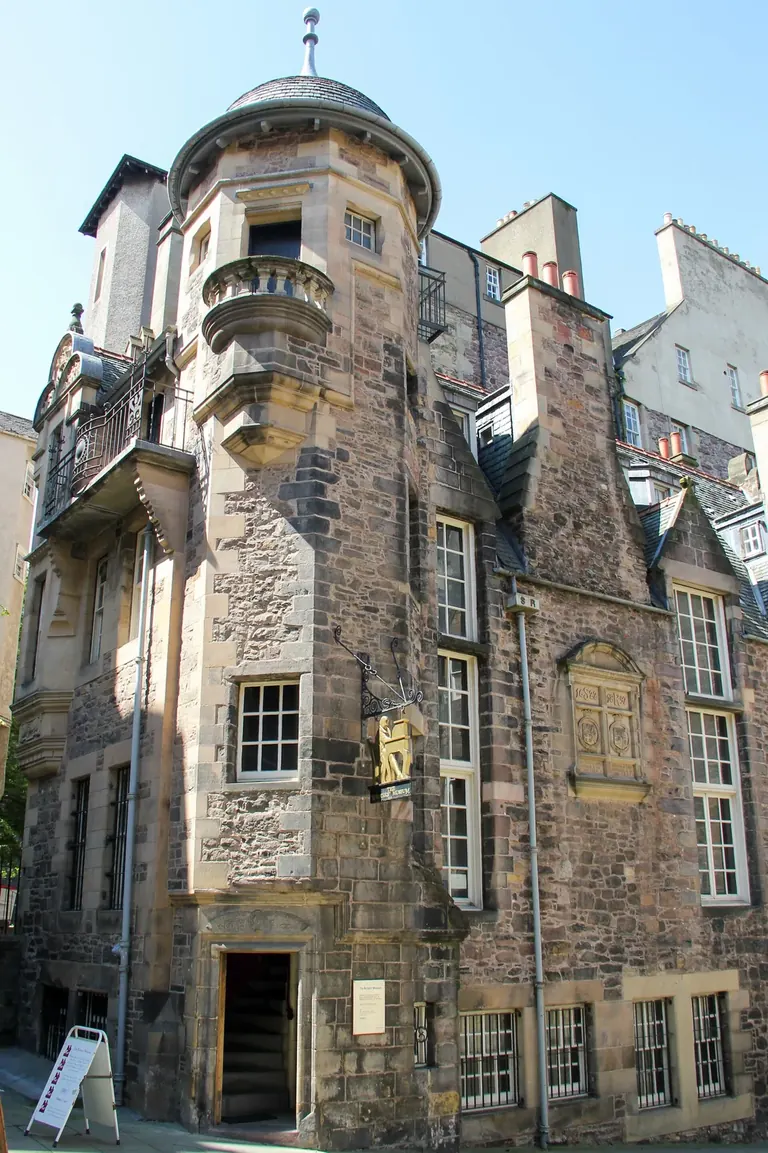
Image credits
9
- Roman Scotland: Life on the Edge of EmpireNational Museums Scotland
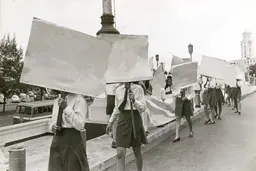
- The Rupture: No condition is permanentCourtesy the artist. © Kiri Dalena
- Blood and Guts: The Twists and Turns of Edinburgh's Medical HistorySurgeons' Hall Museums
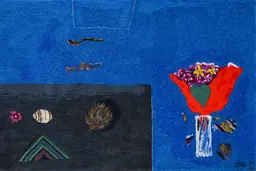
- Elizabeth Blackadder: A Life in ColourCourtesy of Dovecot Studios
- National Museum of ScotlandMaccoinnich / Wikimedia Commons, CC BY-SA 3.0
- Talbot Rice GalleryVysotsky / Wikimedia Commons, CC BY-SA 4.0
- Surgeons' Hall MuseumsRConnor21 / Wikimedia Commons, CC BY-SA 4.0
- Dovecot StudiosMike Wilkinson, CC BY-SA 3.0
- The Writers' MuseumStefan Schäfer, Lich (Wikimedia Commons), CC BY-SA 3.0