 i
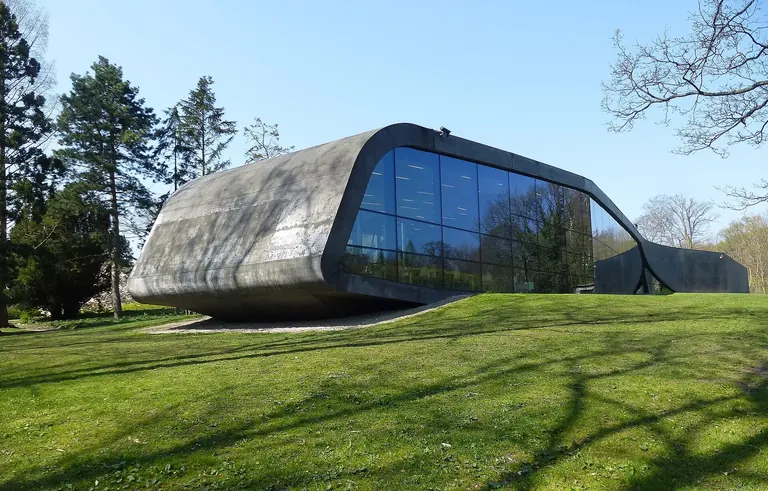
OrdrupgaardCharlottenlund
Camilla Berner: You are Yourself a Sequoia
This exhibition has ended.
Camilla Berner's site-specific work in the renovated Greenhouse of the Art Park traces the history of the sequoia and our fascination with, and exploitation of, nature.
Museum websiteMore in Copenhagen
You walk into a glasshouse from 1921 and find a trunk weighing tonnes, cut from a giant sequoia that has died, lying across it. The work is interactive: the museum says you help bring the fallen giant back to life, and its photos show water spraying over the dark bark, with small ferns growing out of it.
A giant sequoia once stood in Ordrupgaard's park, and two grew at the gate of the kitchen garden in Berner's childhood home on Funen, where she patted the bark for its dull sound. Her catalogue of 17 notes runs from the Sierra Nevada to Carl Bloch, the Funen forester who brought the first sequoia to Denmark in 1866, to the beetles and fires killing the trees now. One note admits the Mac she wrote them on runs macOS Sequoia.
It's a single work in one room, near Finn Juhl's House at the eastern end of the park. It closes on 18 October, and the catalogue is free to read on the museum's website.
Look for
The sequoia trunk
Look for the trunk of a dead giant sequoia, weighing tonnes, laid out in the glasshouse; the museum's photos show it wet and dark, with ferns sprouting from the bark.
The greenhouse itself
Built in 1921 as part of a complex that grew grapes and peaches, it has been renovated and put back on its original spot in the old kitchen garden.
Good for
- An Hour Or Less
- Locals Who've Seen It All
- Nerding Out
Skip if
You want paintings: this is one site-specific work in a greenhouse, built around a single tree trunk.
With kids
Under-18s get into the museum free. The trunk is the interactive part, and the museum's own photos of it show children leaning over the bark.
Also at Ordrupgaard
On now nearby
Image credits
4
- Ordrupgaardjelm6 / Wikimedia Commons, CC BY 2.0
- The Garbage Man – Thomas DamboPhoto: Anders Sune Berg / ARKEN
- Gauguin & Kihara – First ImpressionsCourtesy of Ny Carlsberg Glyptotek
- Camille Henrot, Paper PlanesPhoto: David Stjernholm / Copenhagen Contemporary