The Metropolitan Museum of Art · Upper East Side
Flip Sides: Seeing Korean Art Anew
Treasured Korean objects are turned around to reveal their interiors, reverses, and hidden details, offering a fuller view of each work's form across two rotations.
المزيد في نيويورك
A smiling wooden monk carved in 1700 had votive offerings sealed inside his body, and a scroll found among them names the monk sculptors who made him. The X-rays on the labels show what the other Buddhist figures hide: a bodhisattva keeps its offering in its head, while a clay arhat turns out to be empty.
It's one gallery, 233, with about 50 Korean objects from the Met's own collection, more than half on view for the first time. Things are turned so you see the side usually kept from you: a celadon box left open to show the swirled clay at its rim, the stamp faces of bronze seals, bowls whose incised waves sit inside. If you turn mugs over in shops to read the bottom, this is a whole gallery built on that habit.
It's included with Met admission. Some works change when the second rotation opens on October 31, 2026, and Met Expert Talks on the show run November 5, February 2 and May 4, at 3pm.
لا تفوّت
Kashyapa, the smiling monk
A relaxed, smiling wooden figure of the Buddha's eldest disciple, hollowed for offerings; a scroll found inside dates him to 1700.
The openwork peony jar
Four large peonies with twisting branches form a porcelain lattice, and an X-ray scan shows a second vessel concealed inside.
The mirror with a Buddha on its face
Unlike the other bronze mirrors here, its image is on the reflective side: Amitabha and two bodhisattvas on lotuses, enlarged on the case glass.
The marbled celadon box
A three-inch Goryeo box displayed open, so you can see the spiral of two blended clays at the rim under the green glaze.
The bird-shaped burial vessel
A 3rd-century earthenware bird with a 'mohawk'; its scan shows the head was made separately and a metal staple reinforces the base.
مناسب لـ
- ساعة أو أقل
- الزيارة الفردية
- أهل المدينة الباحثين عن الجديد
- عشّاق التفاصيل
تجاوزه إذا
You want big paintings: this is one gallery of mostly small objects, some under two inches tall.
أيضًا في The Metropolitan Museum of Art
يُعرض الآن في الجوار
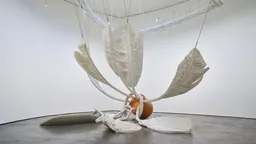
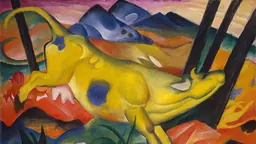

في الجوار
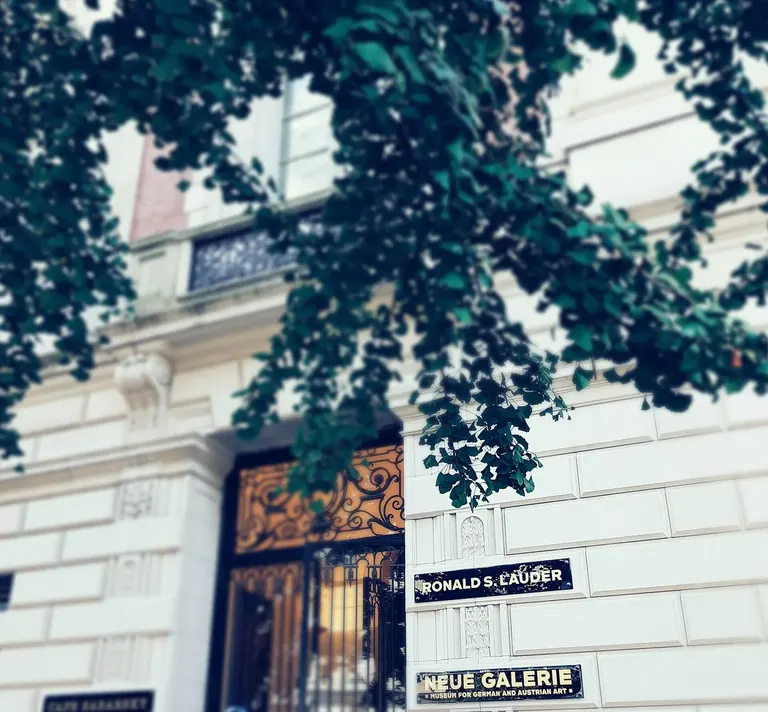
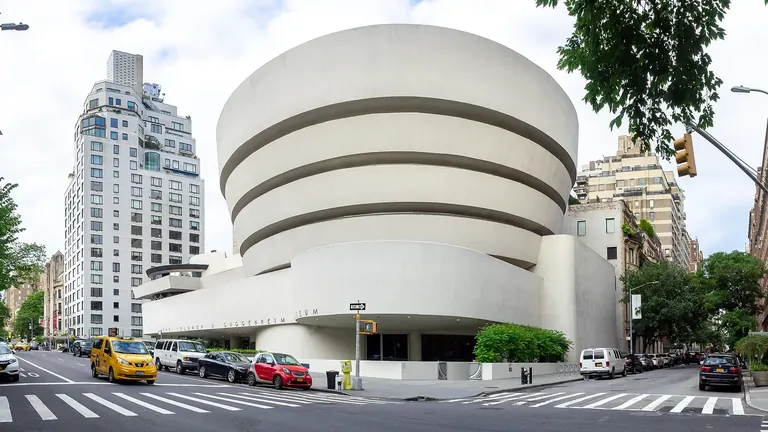
مصادر الصور
8
- Guggenheim Pop: 1960 to NowCourtesy of Solomon R. Guggenheim Museum
- تركيز على المجموعة: تيارات أوروبية حديثة (Collection in Focus: Modern European Currents)Photo: Ariel Ione Williams, Solomon R. Guggenheim Museum, New York
- Taryn Simon | Father Country I Do Love YouCourtesy of Solomon R. Guggenheim Museum
- The Metropolitan Museum of ArtHugo Schneider, via Wikimedia Commons, CC BY-SA 2.0
- Neue Galerie New YorkFrancesca.hyanna19 via Wikimedia Commons, CC BY-SA 4.0
- Solomon R. Guggenheim MuseumAjay Suresh, via Wikimedia Commons, CC BY 2.0
- Cooper Hewitt, Smithsonian Design MuseumEpicgenius, Wikimedia Commons, CC BY-SA 4.0
- American Museum of Natural HistoryIngfbruno, Wikimedia Commons, CC BY-SA 3.0