 i
Jüdisches Museum der SchweizAltstadt Grossbasel
Frank Stella und die zerstörten Holzsynagogen
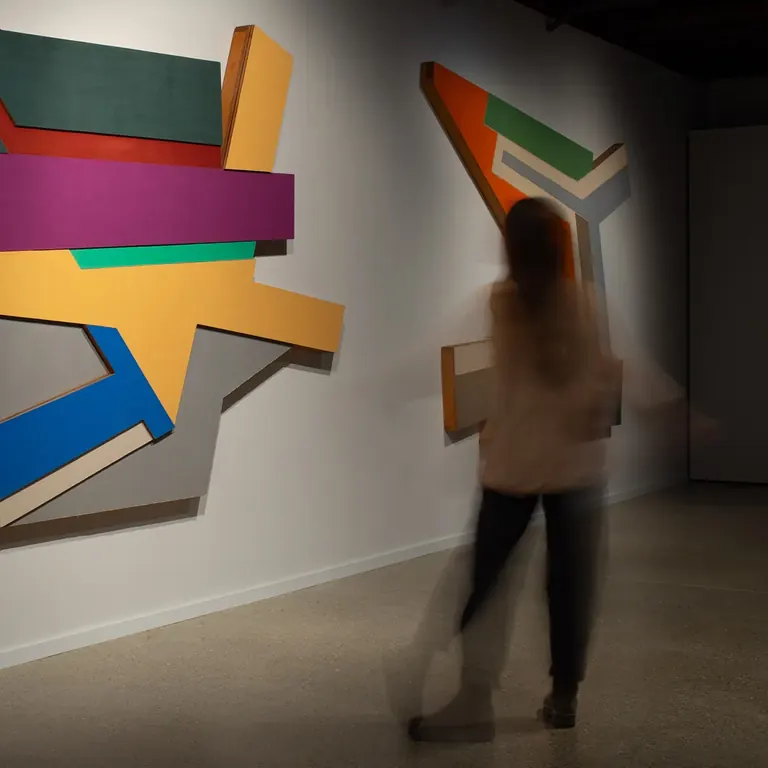
Original works from Frank Stella's Polish Village series and 24 models of destroyed wooden synagogues by Moshe Verbin.
المزيد في بازل
You meet the show before you reach the door. Frank Stella's relief Jeziory (1973), reproduced at monumental scale, covers the facade of the museum's wooden former tobacco warehouse. It grew out of prewar photographs of the wooden synagogue in Jeziory, a small town now in Belarus.
Inside are originals from his Polish Village series (1970 to 1973): collages, maquettes and reliefs named after some 70 Eastern European towns whose wooden synagogues were destroyed in pogroms, fires, the First World War and finally by the Nazis. Stella worked from a book of prewar photographs by the architects Maria and Kazimierz Piechotka. So did Moshe Verbin, born in Sokółka in 1920, who rebuilt the synagogues of his childhood in miniature. Twenty-four of his models stand alongside Stella's abstractions.
Come for that pairing: the same lost buildings as abstract art and as a survivor's models, which the magazine Rusaccent called "deeply moving". Entry is CHF 15, free under 26, sold only at the door; open daily 11:00 to 17:00.
اختيار المحرر
Frank Stella's 1973 relief Jeziory covers the facade, enlarged to the scale of the building. Inside, his Polish Village abstractions of destroyed wooden synagogues stand beside 24 models of lost synagogues by Moshe Verbin, who rebuilt the ones he grew up with.
لا تفوّت
Jeziory on the facade
Look up before you go in: Stella's 1973 relief, enlarged to the scale of the building, is mounted on the front of the old wooden tobacco warehouse on Vesalgasse.
The Gombin synagogue model
Look for Verbin's miniature of the wooden synagogue in Gombin, which was burned, rebuilt from the same book of prewar photographs Stella used.
The Polish Village collages
In the entrance hall hang Stella's collages, each named after an Eastern European town whose wooden synagogue no longer stands.
مناسب لـ
- عشّاق التفاصيل
- الأيام الممطرة
أيضًا في Jüdisches Museum der Schweiz
يُعرض الآن في الجوار

في الجوار
مصادر الصور
9
- Frank Stella und die zerstörten HolzsynagogenMartin Oravec
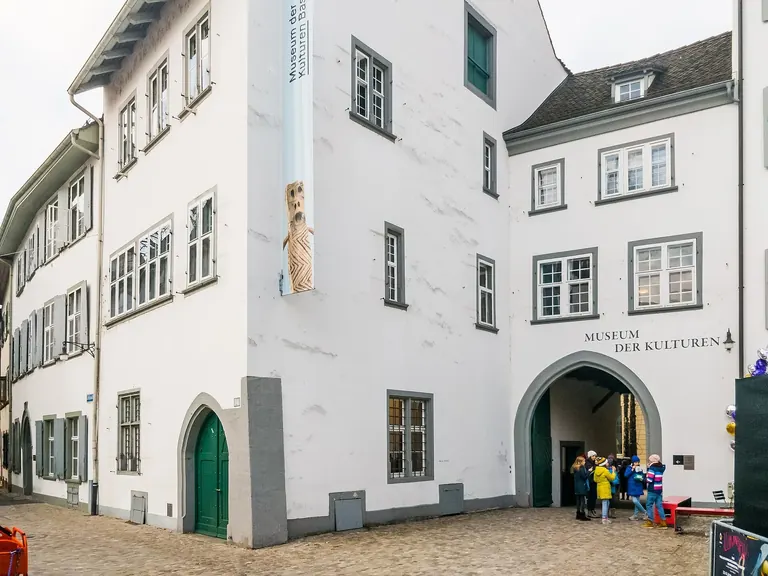
- Die Eule ist pinkCourtesy of Museum der Kulturen Basel
- Tie-dye: gefaltet, genäht, gefärbtCourtesy of Museum der Kulturen Basel
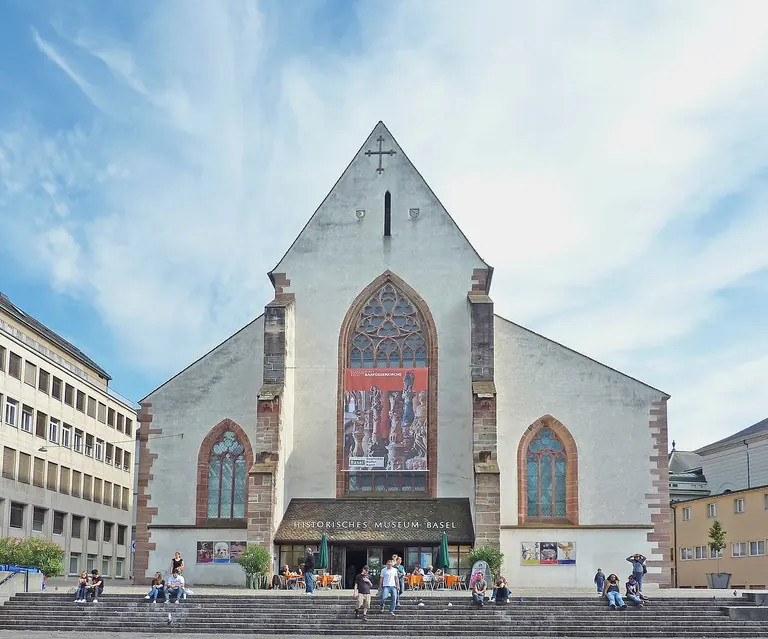
- Atomkraft: Deine EntscheidungCourtesy of Historisches Museum Basel (Barfüsserkirche)
- Jüdisches Museum der SchweizRudolf H. Boettcher / Wikimedia Commons, CC BY-SA 4.0
- Naturhistorisches Museum BaselOwn work / Wikimedia Commons, CC BY-SA 3.0
- Museum der Kulturen BaselRaimond Spekking / Wikimedia Commons, CC BY-SA 4.0
- Historisches Museum Basel (Barfüsserkirche)James Steakley / Wikimedia Commons, CC BY-SA 3.0
- Kunsthalle BaselCharles-François Marie Iguel (1827[1]-1897) / Wikimedia Commons, ملكية عامة