 i
Royal Ontario Museum · Yorkville / Queen's Park
Crawford Lake: Layers in Time
How sediments of a small lake near Milton, Ontario record 1,000 years of human impact, making it the "golden spike" candidate for the Anthropocene.
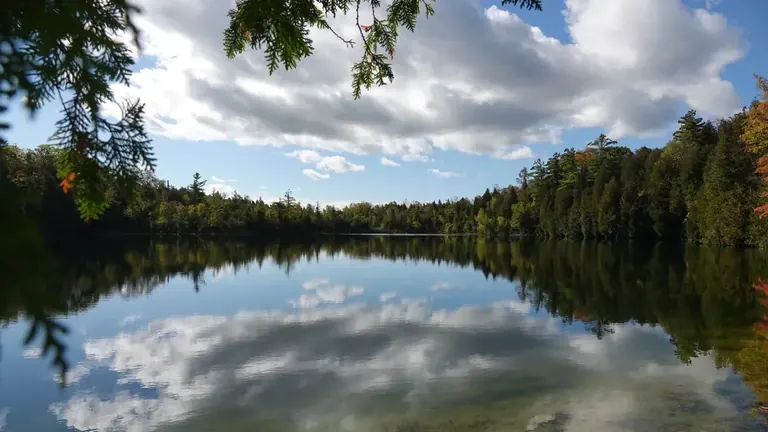
One thin layer of mud at the bottom of Crawford Lake, near Milton, belongs to 1945. It records the first plutonium bomb test at Los Alamos, and that kind of clarity got the lake picked in 2023 as the "golden spike" candidate for the Anthropocene.
The lake's water layers never mix, so each year leaves its own band of sediment, readable like tree rings. You start at a central display that lets you scroll through the layers in fine detail, then move past cases pairing each stretch of mud with life on shore: Indigenous farming from the late 1200s, the Crawford family's 1874 sawmill, fly ash from the region's steel mills. The bands thinned in the acid-rain years and recovered once the pollution was cut. Of 12 sites shortlisted worldwide, the winner is closer than your cottage.
No critic has reviewed it yet, and it's a single-gallery show. It's on Level 3, included with general admission (free for Members), until 3 January 2027.
Ez galdu
The layer timeline
Look at the central display, where you can view the annual layers in fine detail, with animations of how each band formed and markers where the lake changed.
Burnt corn from the lakeside villages
500-year-old grinding stones, pot fragments and charred corn from the Indigenous villages that farmed beside the lake from the late 1200s to about 1500.
The Dish with One Spoon wampum belt
A replica made by Ken Maracle of Six Nations of the Grand River, standing for a 1701 treaty and its rule to take only what you need from the land and water.
A year at Crawford Lake
A large video installation of drone footage over the lake through all four seasons, alongside a film of researchers pulling a frozen sediment core from the lakebed.
Norentzat
- Dena ikusi duten bertakoak
- Xehetasun-zaleak
Ez joan, baldin eta
You want big objects: the centrepiece is a column of lake mud, read layer by layer.
Royal Ontario Museum: beste erakusketa batzuk
Orain ikusgai inguruan
 i
Magnus Hara: Egunaren argia (Magnus Hara: The Light of Day)
Gardiner Museum
 i
Perfekzio-gabeziaren bila: Japoniako eta japoniar zeramikan inspiratutako Macdonald bilduma (In Search of Imperfection: The Macdonald Collection of Japanese and Japanese-Inspired Ceramics)
Gardiner Museum
 i
Uhartearen ondoren: Karibeko kanadar zeramikagintza (After the Island: Caribbean Canadian Ceramics)
Gardiner Museum
Inguruan
Irudien kredituak
9
- Crawford Lake: Layers in Time© Craig Smith, 2023
- Magnus Hara: Egunaren argia (Magnus Hara: The Light of Day)Courtesy of Gardiner Museum
- Perfekzio-gabeziaren bila: Japoniako eta japoniar zeramikan inspiratutako Macdonald bilduma (In Search of Imperfection: The Macdonald Collection of Japanese and Japanese-Inspired Ceramics)Courtesy of Gardiner Museum
- Uhartearen ondoren: Karibeko kanadar zeramikagintza (After the Island: Caribbean Canadian Ceramics)Courtesy of Gardiner Museum
- Royal Ontario MuseumMaksim Sokolov (Maxergon), Wikimedia Commons, CC BY-SA 4.0
- Gardiner Museumremundo via Wikimedia Commons, CC BY-SA 2.0
- Art Museum at the University of TorontoUnderline Studio, CC BY-SA 4.0
- Bata Shoe MuseumCanmenwalker / Wikimedia Commons, CC BY 4.0
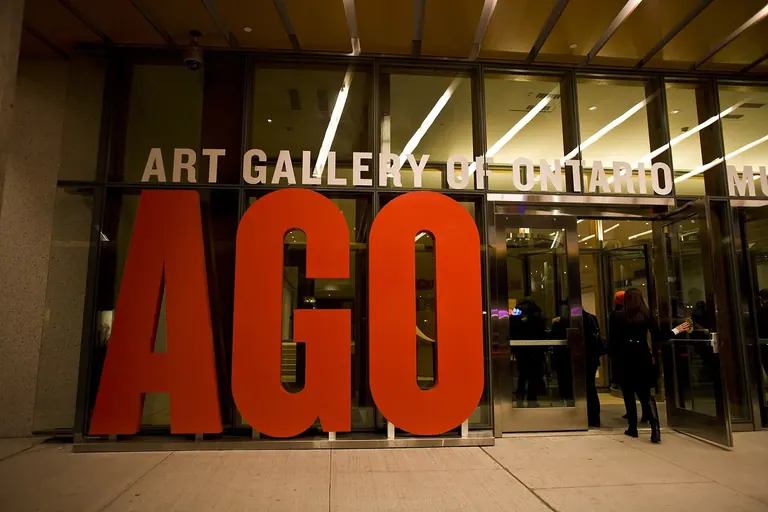
- Art Gallery of OntarioOwen Byrne / Wikimedia Commons, CC BY 2.0