 i
National Gallery Prague – Schwarzenberg PalaceHradčany
Chronos. The Theme of Time in 16th- to 18th-Century Prints
Prints from the NGP's Collection of Prints and Drawings tracing the allegorical figure of Chronos, "Father Time," from triumphs of time to William Hogarth's satires and Josef Bergler's New Year cards.
Gehiago: Praga
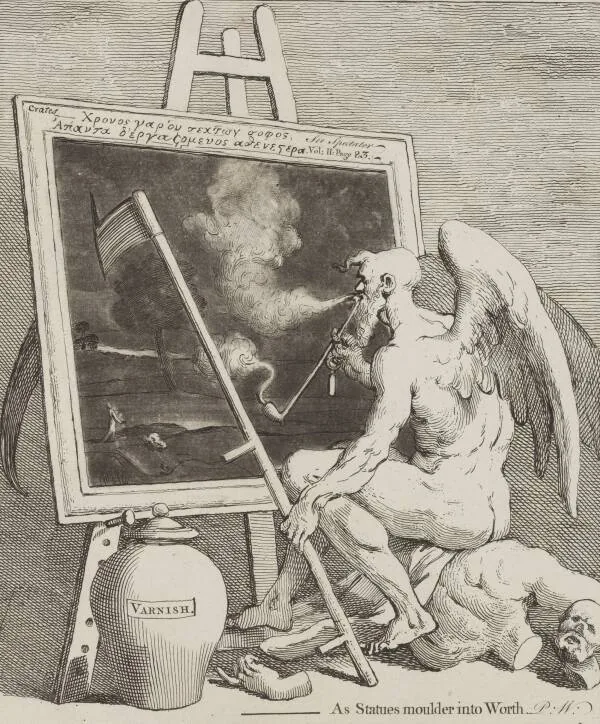
You find Father Time with his back to you, perched on a broken statue, puffing pipe smoke across a landscape painting while his scythe blade pokes straight through the canvas. A jar labelled VARNISH stands by the easel. William Hogarth captioned it "As Statues moulder into Worth".
Like every print here, it comes from the National Gallery's own collection, spanning the 16th century to just after 1800 and grouped by what Time is up to: triumphing, rescuing Truth, judging how people use their hours, and getting mocked by Hogarth. He destroys lives, beauty and art in some prints and plays the wise old man in others. The show ends on Josef Bergler's New Year's cards, and it runs through PF season, so cards from 1812 hang here while this year's PFs are still arriving.
It's in the palace's print cabinet, in the same building as Old Masters I. Basic palace admission is 250 CZK, under-16s go free, and it's open Tuesday to Sunday, 10:00 to 18:00.
Erredakzioaren aukera
National Gallery bildumako estanpaziorik gabeko irudi grafikoek Aita Denboraren arrastoari jarraitzen diote hiru mendetan zehar: denboraren garaipen alegorikoetatik hasi, Hogarthen satirak igaro eta Josef Bergler-en Urte Berriko txarteletaraino. Pragak denborari eskaintzen dion beste ikuspegi bat, Erloju Astronomikoaren azpian pilatzen den jendetzarik gabe.
Ez galdu
Hogarth's Time Smoking a Picture (1761)
Look for the scythe blade stuck through the canvas while Time blows pipe smoke over the landscape, a VARNISH jar at his feet and a broken statue under him.
Georg Pencz's Triumph of Time (about 1539)
Time leans on crutches atop a chariot drawn by two stags, an hourglass at his feet, as a crowd of every age is swept along beside it.
The Triumph of Time after Bruegel (1574)
Time rides a cart chewing on a child, Death follows on a bony horse, and Fame brings up the rear on an elephant, blowing a trumpet.
Truth is the Daughter of Time (before 1612)
A winged, bearded Time lifts naked Truth up into the light while Envy, snakes in her hair, sprawls on the rocks below.
Bergler's New Year's card (1812 or 1813)
Time sprints after a cloud of butterflies, arms out, while a putto in the tree holds his hourglass, above the caption 'Fast immer auf diese Weise' (almost always this way).
Norentzat
- Dena ikusi duten bertakoak
- Xehetasun-zaleak
Haurrekin
Under-16s get in free. Some prints are grim for small children: in the 1574 Triumph of Time, Time is eating a child.
National Gallery Prague – Schwarzenberg Palace: beste erakusketa batzuk
Orain ikusgai inguruan
Inguruan
Irudien kredituak
9
- Chronos. The Theme of Time in 16th- to 18th-Century PrintsCourtesy of National Gallery Prague – Schwarzenberg Palace
- Design for Václav HavelJiří Jiroutek, CC BY 3.0
- Radka Bodzewicz: FAUSTCourtesy of DOX Centre for Contemporary Art
- Květa Kovářová – For the Shape of the FigureCourtesy of Museum Kampa
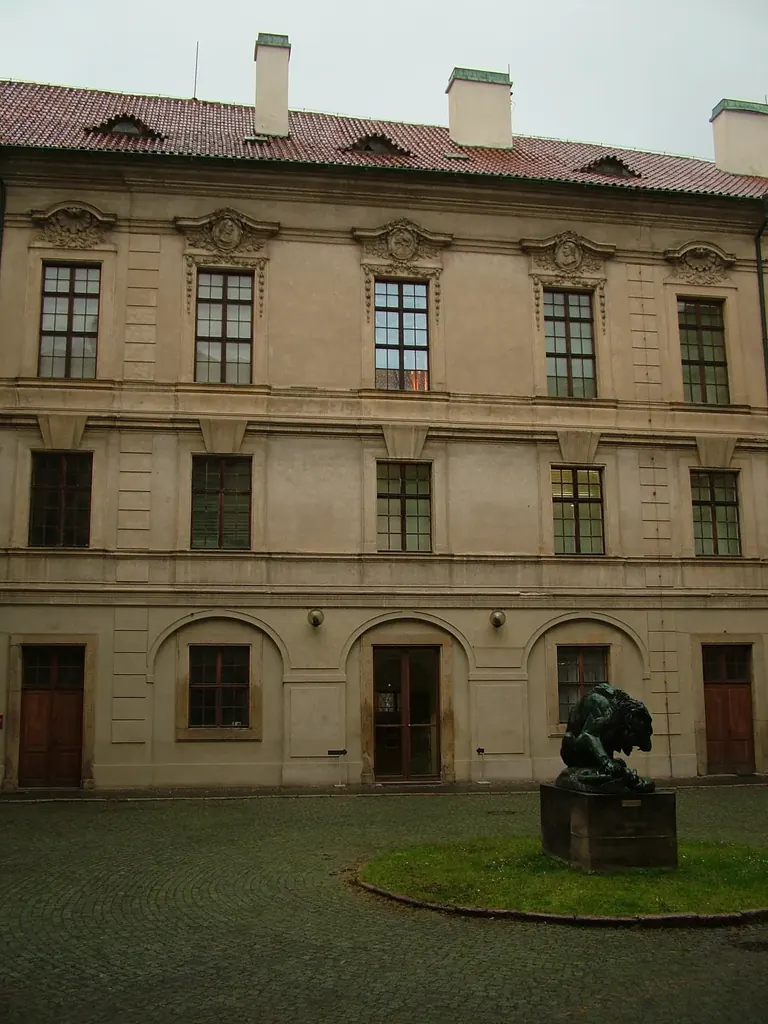
- National Gallery Prague – Schwarzenberg PalaceDiego Delso / Wikimedia Commons, CC BY-SA 4.0
- National Gallery Prague – Sternberg Palacesvajcr / Wikimedia Commons, Jabari publikoa
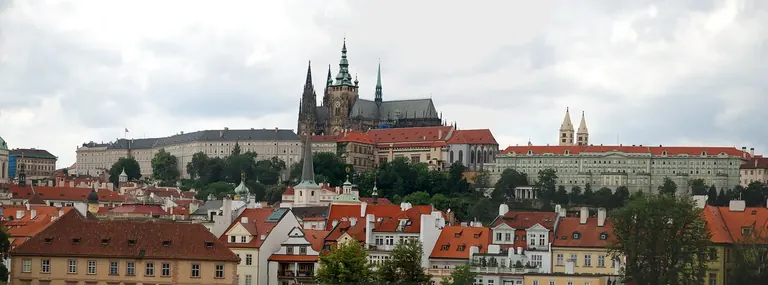
- Prague CastleJanmad, CC BY 3.0
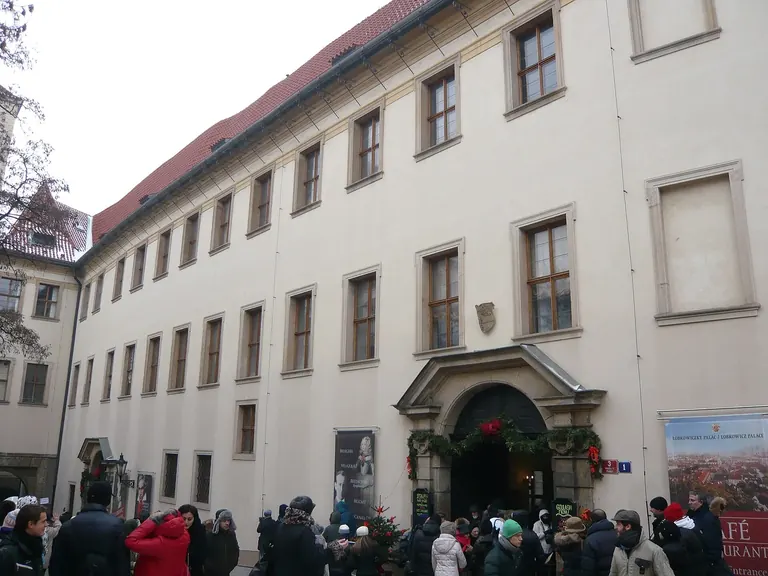
- Lobkowicz PalaceErudy, via Wikimedia Commons, Jabari publikoa
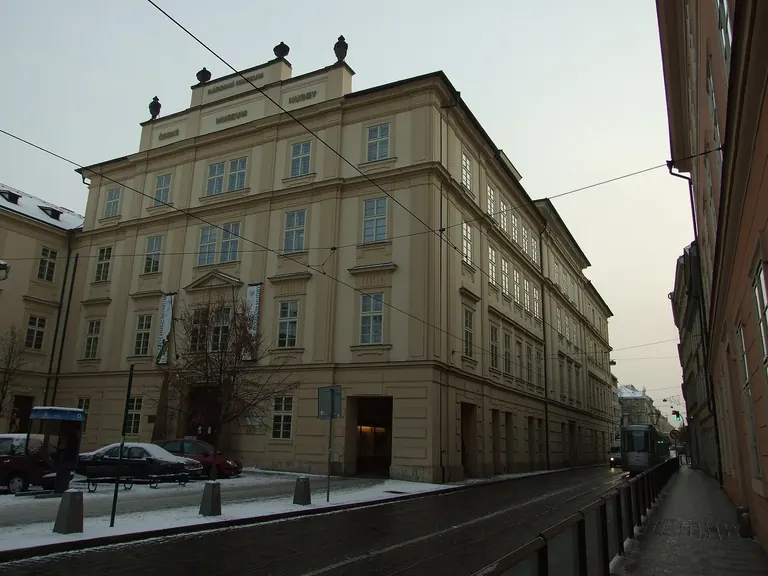
- Czech Museum of MusicAktron / Wikimedia Commons, CC BY-SA 3.0