The David Collection · Indre By (by Kongens Have)
The Art of Desire – an Ottoman Sex Manual and its Context (Begærets Kunst)
A rare Ottoman manuscript with explicit illustrations of desire, power and sexuality, set against older traditions from Iran, Central Asia and India, and contemporary Japan and Europe.
Aurrebista: erakusketa ireki aurretik idatzia
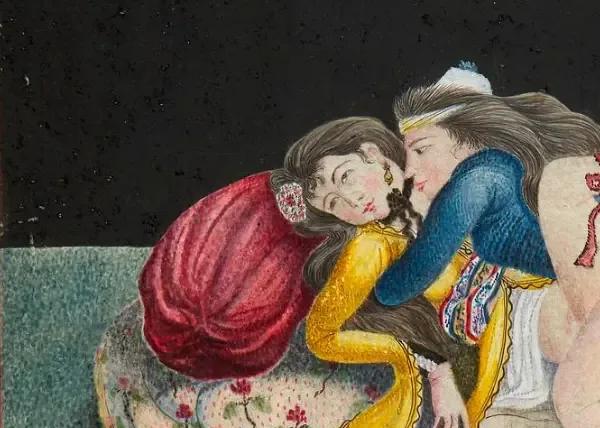
The last page of the manuscript at the centre of this show is a portrait of a man in a distinctive turban, holding a bouquet of flowers. He turns up earlier too, at a tavern table in Istanbul's Galata and in several of the sex scenes. His turban marks him as an Ottoman official, and the museum's catalogue suggests he may have commissioned the book.
Made between 1799 and 1817, it belongs to the bahname genre, where erotic stories and jokes sat next to medical advice on pregnancy, contraception and impotence. The main text is a Turkish translation of an Arabic manual attributed to al-Tifashi, with 85 miniatures on vellum by several anonymous painters. If you picture Ottoman miniatures as courtly, this one covers hammam gossip, same-sex couples and a judge with a one-track mind. The show sets it beside older traditions from Iran, Central Asia and India, and contemporary ones from Japan and Europe.
Entry is free, and the museum stays open until 21:00 on Wednesdays.
Erredakzioaren aukera
Desira, boterea eta sexualitatea irudikatzen dituzten irudi esplizituak dituen otomandar eskuizkribu bitxi bat, Iran, Erdialdeko Asia eta Indiako tradizio zaharragoen eta Japonia eta Europako garaikideen testuinguruan. Sarrera doakoa da.
Norentzat
- Kultura merkea
- Iluntzeko bisitak
- Dena ikusi duten bertakoak
- Xehetasun-zaleak
Haurrekin
The museum describes the manuscript's illustrations as explicit, and its catalogue shows the book covers sex in many forms, so decide in advance whether to bring children.